Sunday, October 08, 2006

Patriot Guard Riders


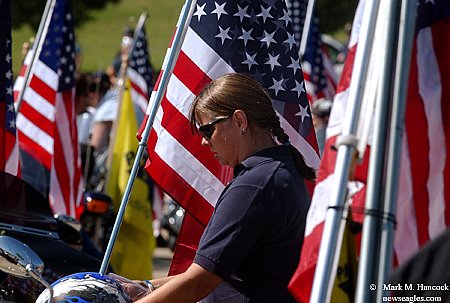
Renee Simons of Lampasas, Texas prepares her bike as a Patriot Guard Rider in the Home Depot parking lot in Beaumont on Saturday, Oct. 6, 2006. More than 200 riders from Texas and Louisiana provided a barrier for the family of Staff Sgt. Edward Charles Reynolds, Jr. from eight protestors from a Baptist church in Kansas.

Photos © Mark M. Hancock / NewsEagles
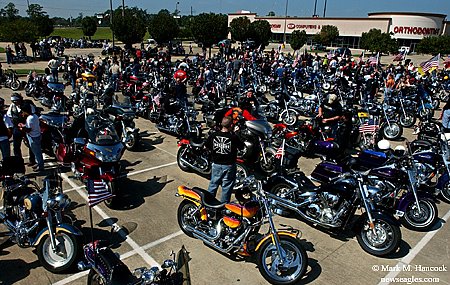

Patriot Guard Riders gather in the Home Depot parking lot before they ride to honor the soldier killed in Iraq.


Motorcycle riders wearing different club colors combine to form the Patriot Guard Riders as they listen to ride instructions before the funeral in Beaumont.


Patriot Guard Riders listen to ride instructions before riding from the Home Depot parking lot to the funeral of Staff Sgt. Edward Charles Reynolds, Jr. in Beaumont.
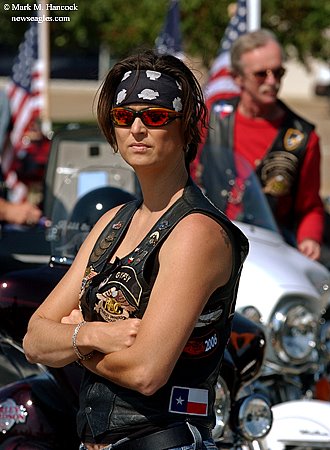

Carrie Johnson of Orange waits for other Patriot Guard Riders to arrive in the Home Depot parking lot.


Renee Simons of Lampasas, Texas reflects on her gas tank as she prepares her bike as a Patriot Guard Rider in the Home Depot parking lot.
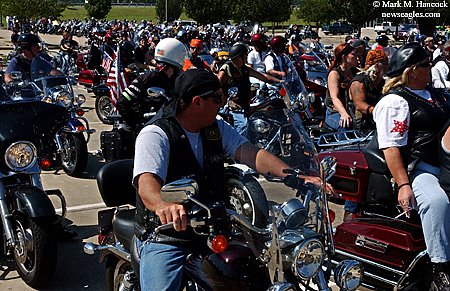

Patriot Guard Riders fill most of the Home Depot parking lot before riding to the funeral of Staff Sgt. Edward Charles Reynolds, Jr.


Milton McKinney of Houston (left) helps orchestrate the Patriot Guard Riders as they leave to provide a barrier of honor.


Military veterans within the Patriot Guard Riders line the road with American flags to provide a barrier to honor the family of the fallen soldier.


Patriot Guard Riders provide a barrier to honor as family and friends arrive for the funeral.
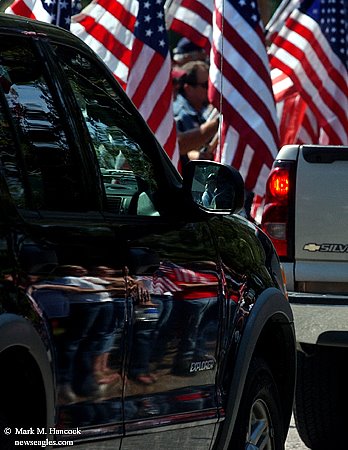

Patriot Guard Riders reflect off vehicles as they provide a barrier on both sides of the road to honor the family of Staff Sgt. Edward Charles Reynolds, Jr. as his family and friends arrive before the funeral.


Patriot Guard Riders place their hands over their hearts as the family and friends of Staff Sgt. Edward Charles Reynolds, Jr. arrive before his funeral.


Patriot Guard Riders provide a barrier to honor before the funeral.
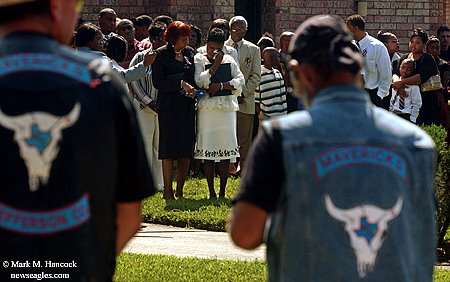

Patriot Guard Riders provide a barrier to honor the family of Staff Sgt. Edward Charles Reynolds, Jr. before his funeral in Beaumont.

Please see additional photos at Fayrouz's Chaldean Thoughts blog and/or read "Solemn salute to Southeast Texan who died in Iraq" by Christine Rappleye and "Counterprotesters outnumber funeral picketers from Kansas" by Rolando Garcia.
 

Saturday, October 07, 2006

Brides Against Breast Cancer


Photos by Mark M. Hancock / © The Beaumont Enterprise

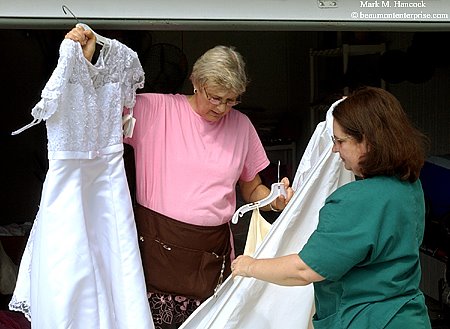
Dee Appel hangs donated wedding gowns on a clothes rack in a family member's garage in Lumberton on Monday, Oct. 2, 2006. The gowns are sold by Brides Against Breast Cancer to raise money to grant wishes for Stage IV breast cancer families. More than half of the gowns sold at these shows are brand new and donated by dress designers.


Dee Appel (left) receives donated wedding gowns from Sharon McIntyre of Silsbee (right) at a family member's garage. Appel has Stage IV breast cancer herself. Time magazine will feature Appel's story in its Oct. 16 issue.


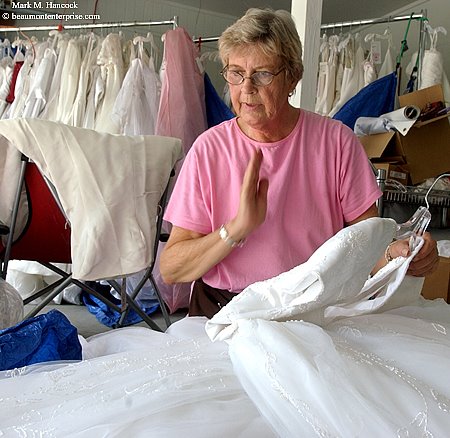
Dee Appel sorts donated wedding gowns on a clothes rack in a family member's garage. Brides Against Breast Cancer will hold a wedding gown sale and fundraiser at the Beaumont Country Club on Oct. 13 and 14.

Stage IV breast cancer is a terminal level. October is Breast Cancer Awareness month. Women age 40 and older are strongly encouraged by the American Cancer Society to get a mammogram to detect, diagnose and fight breast cancer before it gets to Stage IV.

Please read "Making memories from bridal memories" by Jane McBride.
 

Friday, October 06, 2006

A sad homecoming


Mark M. Hancock / © The Beaumont Enterprise

The Coussou family of Beaumont shows support at the Beaumont Municipal Athletic Complex as the body of Staff Sgt. Edward Charles Reynolds, Jr. travels down Highway 90 in Beaumont en route to Port Arthur on Wednesday, Oct. 4, 2006.

Please read "As defender of flag returns home beneath it, Beaumont police brace for funeral protesters" by Rolando Garcia and Jennifer Avilla and help support this honorable family.
 

Thursday, October 05, 2006

Hit before the goal line

West Brook's Joe Chaisson (No. 11, top) is brought down near the goal line by Atascocita's Royce Parham (No. 30, left) and Monty Hobbs (No. 32, right) during a high school football game at Humble High School in Humble on Saturday, Sept. 30, 2006.

Mark M. Hancock / © The Beaumont Enterprise
 

Wednesday, October 04, 2006

See photo mosaics in person

I started to seriously test the art waters with large-scale photo mosaics lately. Consequently, I must announce some exhibit openings.

The first show is The Art of Digital Photography Show. It's an international juried competition show. "The Librarian" was chosen to exhibit from 2,730 entries from 32 countries around the world. The exhibit takes place from Oct. 6 - Nov. 19, 2006 at the Lyceum Theatre Gallery in San Diego's historic Gaslamp Quarter. The opening reception takes place on Saturday, Oct. 7 at 6 to 9 p.m.

The second show is a group show by The Beaumont Enterprise PJs. Each PJ will display about five pieces. The images represent each PJ's approach to "art." Consequently, don't expect PJ work.

The exhibition takes place from Nov. 4 - 25, 2006 at The Art Studio, Inc., 720 Franklin, Beaumont. The opening reception takes place on Nov. 4 at 7 to 10 p.m. Remaining copies of "Rita Captured" will be available for purchase and signing during the reception.

The Beaumont exhibit is the first show where more than one of my photo mosaics appear in one location (other than my Web site and home). The images are for sale and delivered at the conclusion of each show (Beaumont may feature a not-for-sale image or two). Don't have a heart attack over the prices of my limited-edition pieces. They're actually inexpensive this round. I can absolutely promise the prices are going to go up steeply soon. In other words, get 'em while their hot.

If y'all happen to be in either location during show hours, please check them out. Since I won't be able to make the San Diego show, I'd really appreciate any feedback about the show and about my piece (how close to the toilet is it?). :-)

After this round, expect some posts about preparing images for art shows. There's a lot to learn.

Enough for now,
 

Groves Pecan Festival


Photos by Mark M. Hancock / © The Beaumont Enterprise
The Groves Pecan Festival midway is busy at Lions Park in Groves, Texas on Saturday, Sept. 23, 2006.


Bradyn, 5, (left) and Jaxson Marchand, 2, (right) try to select prize-winning ducks at a midway booth during the Groves Pecan Festival at Lions Park.


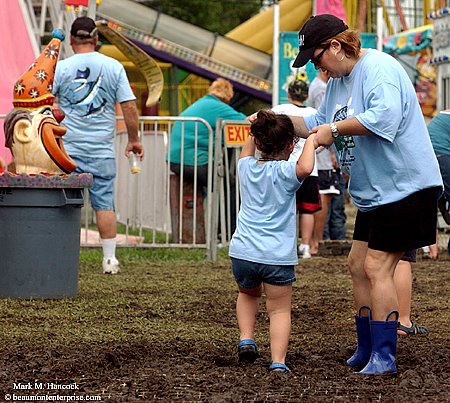
Amy Boneau (right) of Groves pulls her neice Addie Hervey, 4, (left) from the muddy midway during the Groves Pecan Festival at Lions Park.


Chris Landry of Bridge City carries his daughter Nicole Landry, 6, through the muddy midway during the Groves Pecan Festival at Lions Park.

Tuesday, October 03, 2006

Texas FM-1


Photos by Mark M. Hancock / © The Beaumont Enterprise

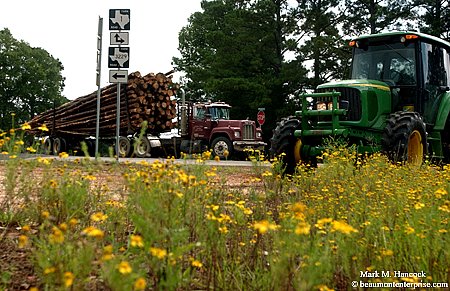
A truck hauls a logging tractor along Texas FM-1 in Sabine County on Thursday, Sept. 21, 2006. The state's first farm-to-market road was paved by the state at the urging of area industries.


Sheena Williamson, 15, mows the easement by her home in Bronson, Texas as a lumber truck passes.


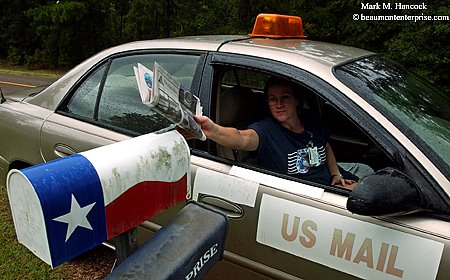
Pineland Route 1 carrier Sandra Creech delivers mail on Texas FM-1 in Sabine County. The road was designated as Texas FM-1 on April 23, 1941.


A log truck moves from a dirt road onto Texas FM-1. The winding road travels through former lumber towns, pine forests and farmland.


A log truck turns onto Texas FM-1 in Sabine County. The state continues to maintain the road.


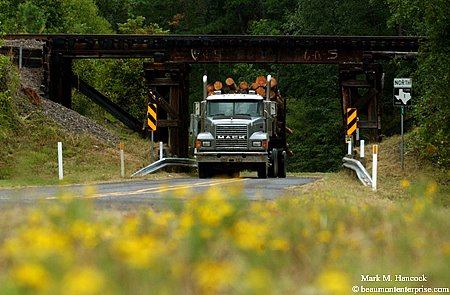
A log truck passes under a railroad tressel near Pineland, Texas on Texas FM-1. Temple Lumber Co. and two gas companies initially convinced the state to pave the road and keep their trucks from being stuck in the mud.


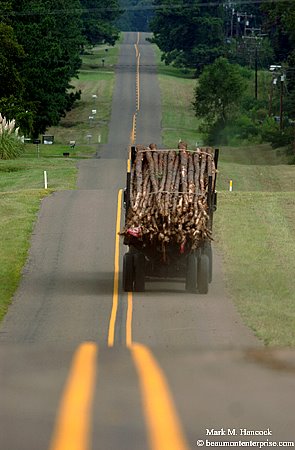
A log truck moves along a long stretch of Texas FM-1 in Sabine County. FM-1 successfully freed farmers from muddy roads and spread the concept throughout the state.

Please read "FM 1 in East Texas piney woods is the original country road" by F.A. Krift.
 

Monday, October 02, 2006

Chubby Checker concert


© Mark M. Hancock
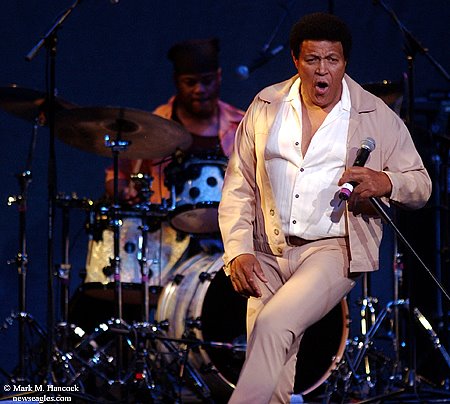
Chubby Checker performs in concert at the historic Jefferson Theater in Beaumont on Saturday, Sept. 23, 2006.

Oct. iTunes selections

* Let's Twist Again by Chubby Checker

* Black Horse and the Cherry Tree (radio version) by KT Tunstall
* By Your Side by Sade
* Der Kommissar by After the Fire
* Gia (Original Radio Edit) by Despina Vandi
* Intuition by Jewel
* One Thing Leads To Another by The Fixx
* Satisfaction (Radio Edit) by Benny Benassi & The Biz
* South Side by Moby
* Werewolves of London by Warren Zevon

Check out the iTunes samples.

I skipped Sept. because I had to prepare a photo mosaic for The Art of Digital Photography Show in San Diego and all my cash went there. I'll post it when I catch up. :-)
 

Sunday, October 01, 2006

Funeral of a Vietnam MIA hero


Photos by Mark M. Hancock / © The Beaumont Enterprise

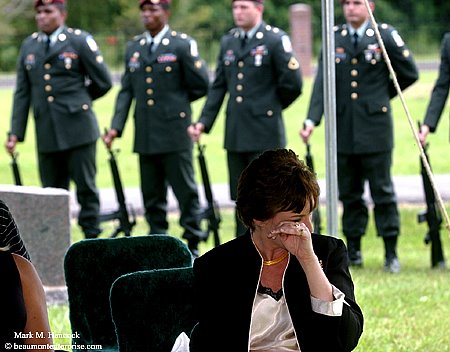
The remains of Sgt. Maj. George Ronald Brown await the funeral service at Magnolia Park Cemetery in Dayton, Texas on Friday, Sept. 29, 2006. Sgt. Maj. Brown was reported missing in action (MIA) on March 28, 1968 after he encountered the enemy during a Special Forces operation in Tchepone, Laos. A tooth, contained in the urn, was recently returned as the only remains of the fallen soldier.


Ronda Brown-Pitts cries during the funeral service for Sgt. Maj. George Ronald Brown at Magnolia Park Cemetery in Dayton, Texas. Although the family doesn't believe the tooth actually belonged to their fallen hero, they tired of arguing with the military and decided to accept the remains.


Honor guard members from the HQ-HQ Co. of the U.S. Army Garrison JRTC at Fort Polk, La. depart after firing a salute during the funeral service for Sgt. Maj. George Ronald Brown at Magnolia Park Cemetery.

Please read "Daughter doesn't believe remains are those of war hero dad" by F.A. Krift.
 

Saturday, September 30, 2006

Interstate-10 med-evac


Mark M. Hancock / © The Beaumont Enterprise

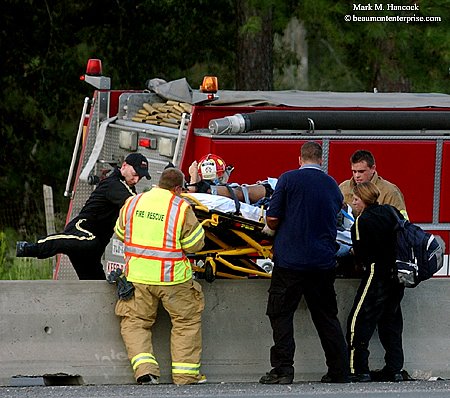
Emergency officials move an injured person over a construction barrier to an awaiting helicopter after a serious wreck on westbound Interstate-10 in Orange County on Saturday, Sept. 23, 2006. The wreck and response closed the highway to through traffic.

Friday, September 29, 2006

Trinity River Bridge to be destroyed


Mark M. Hancock / © The Beaumont Enterprise

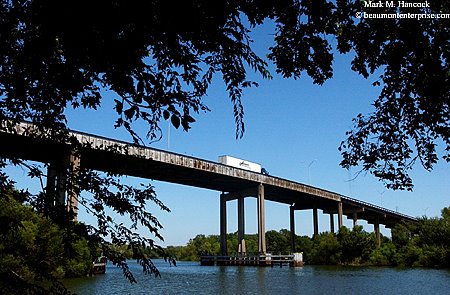
A truck travels over the Trinity River bridge on Interstate-10 in Chambers County on Wednesday, Sept. 27, 2006. TXDOT plans to replace and widen the bridge over the next three years.

Thursday, September 28, 2006

Afternoon fishing


Photos by Mark M. Hancock / © The Beaumont Enterprise

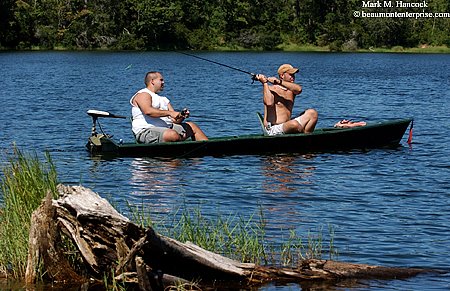
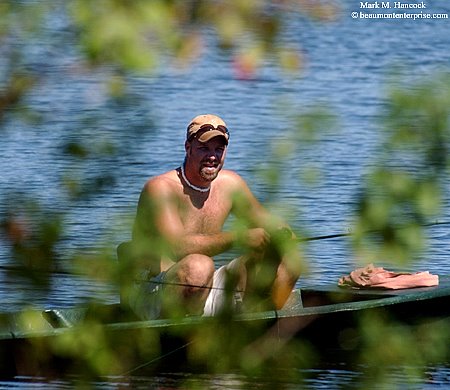
John Price (left) ducks as Alan Cunningham (right) casts for fish in a public stocked pond near Bigner Road in Beaumont on Tuesday, Sept. 19, 2006.


Beaumont resident Alan Cunningham fishes in a public stocked pond near Bigner Road. The fish weren't biting too well in the afternoon heat.
 

Wednesday, September 27, 2006

Web-cam commo


Mark M. Hancock / © The Beaumont Enterprise

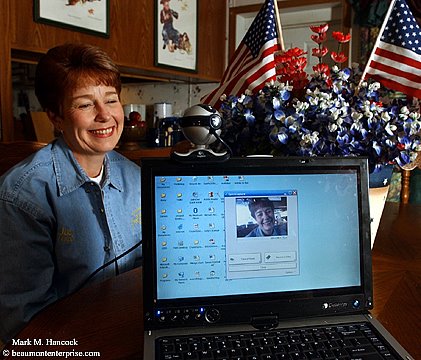
Judy Harrison poses for a portrait on a Web-cam at her home in Lumberton on Sunday, Sept. 10, 2006. She used the Web-cam to communicate with her husband while he was serving in Iraq.

Tuesday, September 26, 2006

Houston Lamar runs past Memorial


Mark M. Hancock / © The Beaumont Enterprise

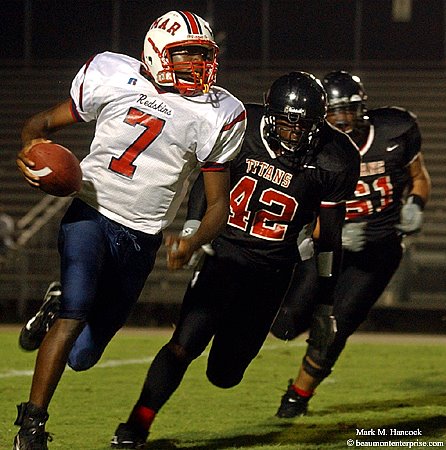
Houston Lamar's Demetrius Woods (No. 7, left) runs from Port Arthur Memorial defenders Darius Leviege (No. 42, center) and Marcus Abott (No. 61, right) during a high school football game at Memorial Stadium in Port Arthur on Friday, Sept. 22, 2006.
 

Denis Delestrac interview

Please read Denis' bio and see his images.

What advice do you have for PJs who want to become IMAX cinematographers?
I would advise them to be very curious. Have their eyes open and have a sensibility toward what's important in life, how they can contribute through their pictures or films to build awareness about any kind of subject that needs to be known. Just contribute to the future around their community, nationally or even internationally.

To be more practical, learn how to express your inner self on film - I don't trust academism as much as I believe in the power of someone's will and passion: if you want to move to film-making, go ahead, grab a camera, get some film and shoot. Then learn how to use Final Cut or any other editing software and start building your own creative and informative language.
Could someone start with video format?
Yes. Of course.

The great advantage we all have now is that with a couple of thousand dollars, you can become a production company. You can get a small DV cam. You can get a laptop, install Final Cut on it and you are a production company. You can shoot. You can edit. You can work the sound. You don't need much more to get started. If you have creativity and sensibility and if you know a few basics – but again, technique is the least important - it's going to work. You're going to get somewhere, but never forget who you are working for and connect with your audience.
What do you think about current PJ video trend?
I didn't know about this trend. As far as I'm concerned, I believe that photography, film, the Internet or any other media all have the same potential for impacting, informing and building awareness, they are just different ways of communicating with an audience. Moving from still photography to motion can be considered as an evolution. There are emotions that can be expressed differently through an audio-visual medium. It's another language with a different alphabet. But the impact of photography is also very important.
What equipment used on IMAX films?
Large format filmmakers use very big cameras, which weigh about 80 pounds and make moving around on location very slow and difficult. The magazines of film weigh very, very much also. You only have three minutes of film in each can. For its technical and creative requirements, I consider it one of the most complicated filming process.

Because it is going to be projected on a big screen, you have to frame it in a way that's not going to have people want to vomit when they see the film (laughs).

You can put all the regular motion camera lenses that you want. They are regular film lenses. Our experience is shooting in 2D, but the 3D cameras work with two magazines and are bi-focal, which means two lenses are used in parallel to reproduce the human eye's vision.
What makes IMAX different then?
During the shooting, you have to set up - very well - all the shots. There is so much information on the frame. It's a 70mm frame, the largest film used in motion pictures. You've got so much information on each frame that you've got to be really careful with how you point your camera.

For example, if you are in the desert, and you have this beautiful, virgin view and you have your character walk through your frame. [However], you have a step on the sand that you don't want or a discarded cigarette butt. You're not going to see it when you shoot the film, but it's going to be huge on the giant screen where it's projected.
It's four times larger. It's like shooting medium format instead of 35mm.
Exactly, it contains more visual information

And when it's projected, it makes the audience read - literally - the screen. In an IMAX theater, you see the people looking around and moving their eyes around the screen because there's so much to see. That makes the editing much slower than in TV film. This allows the audience to absorb all this information.

It's like in reality. You're not still. Your eyes move. When you're in an IMAX theater, it's thethee same. You look to the right, to the left, upward and downward. You observe your environment.
Since it's a wrap-around screen, do you use a fisheye lens?
It depends on the shot. You use wide angles all the time because most theaters have the dome - it's not a flat screen, it's a round screen. You want to cover all of the dome and have the same curve that is going to be on the projection surface so you can see the film correctly.

If you shoot flat, when you project on the dome screen, it'll be deformed.
Special training?

There is no training. It's all based on empiricalism. There are film schools, but large format filmmaking is not taught there. There is no book. You don't learn to shoot IMAX except by doing IMAX. It's all based on the experience of the people who do it. You are lucky if you hang with the few guys in the world who have experience doing IMAX.

In our case, since "Mystery of the Nile" was our first film in IMAX, we co-produced it with MacGillivray Freeman Films, who are based in California. They are the real big, No. 1 IMAX in the world.
You learn by being around people who know this.

To work on a production, I think most of the people who now work on the films, they have experience in 35mm. They have worked around different shootings. You can contact production companies. You have to be ready to work - at the beginning - for little money and to invest a lot of passion if you want to stay in this world. There are many, many people who want to be there.
How does the market look for IMAX and cinematographers?

There are actually quite a few new IMAX theaters in the world that are going to open. The general trend now is these theaters are programming more 3D films because they slowly get equipped with 3D projectors. So, what I would suggest to the young generations is to get very strong in digital - both in shooting and in projecting.

There is a lot of work for projectors - for the projection in the theaters. You don't shoot, you project the film, but it's interesting also. There are many parts of the chain. You are the last guy in the chain, but you are very important in how the people are going to see the movie. You're also going to work with the focus, with the lenses, with lights - it's the same.

It's like when you work with your camera and then you work with the enlarger - same kind of thing. The enlarger is very important. You work with the lens, you work with the lights, you work with everything. Part of the final result is in your hands.

It's the same when you shoot the film and then you project the film I would say. There is a lot of interest to work in the theatres and – from what some theater directors tell me – it is hard to find and hire a good projection person.

I would get into digital, both shooting and projecting, and I would be very interested in all 3D technologies. This is what it's going to be and very, very, very big. Maybe I'm too radical here, but I think 2D is a species that could be extinct very soon for IMAX. We could go farther in time, but it's going to happen in your home also.
What's your lifestyle like?
When you are in a production company, you spend a lot of time developing projects and searching for funding (laughs). It's a pain in the ass because what we want is to get out to Africa and shoot a film, and travel, and be in the editing room and create. Unfortunately, you have to go through this funding part, which, personally, is not my favorite.

But it's a pretty normal life. Sometimes you go to festivals, but most of the time you have regular office work, make your phone calls, have meetings and try to raise money for the film. When you have gone through all the barriers, all the process of getting the money, creating a script, then you pack your stuff and get out of there and you go shoot. [It's] the most stressful, exciting, amazing thing in the world.
How does funding work?
It's a custom thing. Each project is funded in a different way. There's no rule for that.

You can work in co-production, which means two or more production companies are going to put all their assets together to make a film become a reality. It can be financial resources or what we call "talent," or "in kind." It could be cameras. It could be an editing facility, the stock or a director of photography - it could be anything. Whatever you have, you put it in to make a co-production.

Then, you have all the credits that some banks [and] savings companies are willing to give you to participate in the film.

Especially in the states, you have these foundations. The National Science Foundation just gave $2.2 million for an IMAX film, which is incredible. We don't have that in Europe. You don't get 2 million bucks like that, it's not in the culture. That's really only here in the states, and I believe European corporations and foundations should get more daring and give larger support to the independent filmmakers.
Are IMAX documentaries more like PJ work or like movies when it comes to ethics?
In the first place, it's hard to make a direct link between photojournalism and filming IMAX or anything else. You don't work exactly the same way.

IMAX is a strange genre. It's in-between. You have documentaries that always have a part of fiction. Those cameras are so big. Each shot takes so much time to set up that you can't improvise. You can't run behind your character with an IMAX camera on your shoulder. If something happens suddenly, typically you're not ready to shoot.

It's not like video. When you shoot video, you just press record, and you get your images. When you shoot IMAX, you have to spend two hours to set up the shot (laughs) and your crocodile attack has been finished a long time when you are ready to shoot (laughs). You can't improvise.

This means it always has to be - even if it's not storyboarded - it has to be prepared. You have to know what you're going to do.
Then how do you do a crocodile attack?
You don't do it.

On "The Mystery of the Nile" we also had video cameras. The members of the expedition had video cameras with them. Whenever something happened - or, once in a while, they would take the video camera out and shoot and do interviews between them and shoot whatever was going to happen.

For example, they got attacked several times by crocodiles. They even got shot by what we call "the shifters" in Ethiopia. They are the bandits in Ethiopia. So, what we do in this case is we want to portray the reality in the IMAX film. So we recreate the situation and we shoot it. Which means what you see on the screen is not the real guy that shot at the expedition. But, since it's impossible to see it how it really happened, we shoot it again. It's in between reality and fiction because it really happened and we put it in the film, but what you see is not exactly what happened at the moment it happened because you're unable to shoot it.
How many languages do you speak?
French, English, Spanish, Catalan - I would say four-and-a-half because I speak a little Arabic.
How important has been multi-linguistic been in your career?
Crucial. You're in the states. You're in the country where the language is the most used in the world. But for me, being French, if I didn't speak English, I wouldn't go anywhere. Really. All your work language - most of the time - is English.

You shoot in English because most of the technical crew, they are from here. Even if you are with an Italian, a Spaniard and a German, you're going to speak English because you don't speak all these languages.

It's all a reflection of the economy. Most of the theaters are here in the United States. Eighty percent of the IMAX market is here. If China were the number one film market, we would all speak Mandarin (laughs).
What's your biggest visual pet peeve?
Lack of content. There are images that are totally empty. I want to see both the atmosphere of the situation that is captured and I want also to see the sensibility of the photographer - in the same image.
How do photographers do that?
Have a different eye. Work with their feelings. I don't know how to explain that, but when you get in the situation, there are these few shots that you are going to shoot in the beginning. You know you're not inside. You're not in the action. You're not there. And you shoot and you shoot and then you start entering - getting inside your character, his soul reveals to your lens - the essence of the situation is within your reach. You start to control the environment. You are there. That's the moment when you can capture the essence of the moment or the person.

That's all created by you. It's inside of you. It's another feeling of sensibility of yourself because if you give two people the same camera and you put them in the same situation, they're not going to have the same images.

One is going to maybe make a shot that is going to make you want to cry. The other is going to make a shot that's just going to inform you. That's the difference. But the difference is sensibility. It's not technique. It's not a matter of diplomas or schools or whatever. It's just you. If you are a good photographer, that's how I believe you have to work with your heart and with the extension of it, which is the camera.
Anything else?

In my experience when you want to do something, you put all your passion and you positivism and you do it. If you are really passionate about it, you will make it. I'm sure about that.

The money is not really important. I don't earn a lot of money, but it's really exciting. It's about the life that you're going to get. Having a bigger car or bigger apartment - I don't care. I'm fine. I have food every day. I have a beautiful wife. I'm healthy. That's it.

If I could get a Porsche, (laughs) that would be cool. It would be fun the first week, but afterward, I'd have a Porsche and that's it. Material stuff doesn't make you happier. The key is inside you, not in your garage or bank account.
Some readers are concerned about just getting a burger.
They can get a burger. They can make a living. Getting rich, that's another thing. I'm not there either. That's not my goal. My goal is just to have a fun and an enriching life. That's all. I believe this goal is underway (laughs).

Denis is in Spain now, but has graciously agreed to answer any follow-up questions. Either post questions in the comment section or e-mail them to me (let me know your name, city and blog address for a link). I'll add any questions and answers to this post until Nov. 1, 2006.

Marie asks, "I am curious to know a bit about the technological timeline advances in IMAX history and what Denis forsees as future major innovations in the field. Thanx."

Cameras and Film:
IMAX cameras are specifically designed by the IMAX corporation to shoot 15 perforation, 70 mm film (15/70) - the world's largest film format. Their weight is between 42 and 100 pounds. We use Kodak film that the firm manufactures especially, upon demand. The large format projectors are the most powerful in the world. The key lies in the Rolling Loop technology which advances the film in a wave-like motion at 24 frames per second. During projection, each frame is positioned on fixed registration pins and a vacuum holds the film flat against the rear lens element. When combined with IMAX 15/70 film they project images of immense size, sharpness and clarity.

A bit of History is located on Wikipedia.

Future:
The industry is heading towards MORE DIGITAL (production, triggered by an increasing number of digitally equiped theaters) and MORE 3D.

Enough for now,
 

Monday, September 25, 2006

Holly Beach sunset


Mark M. Hancock / © The Beaumont Enterprise
Dragonflies buzz a drainage canal as the sun sets in Holly Beach, La. on Wednesday, Aug. 30, 2006.
Enough for now,
 

Sunday, September 24, 2006

Hurricane Rita anniversary:   Texas

It's been a year since Hurricane Rita hit Southeast Texas and Southwest Louisiana. We'll always remember the date because it's also Fayrouz's birthday. Last year, we "celebrated" by eating some Zebra snack cakes before Rita ripped the roof off the newsroom and destroyed the entire area. This year, thankfully, her birthday was celebrated at a fine restaurant with a tasty whipped-cream cake.

Hurricane Rita is barely mentioned in the news outside of this area. However, in an area where many folks still have blue roofs and shattered dreams, it's mentioned often. So often, in fact, that the word "Rita" has appeared in every edition of The Beaumont Enterprise since the tropical storm was named.

Although we're all tired of Rita, Katrina and any other mention of hurricanes, we must still reflect on how the area is recovering after one year.

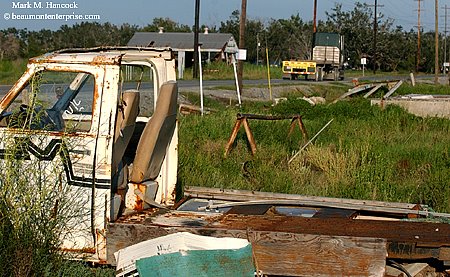
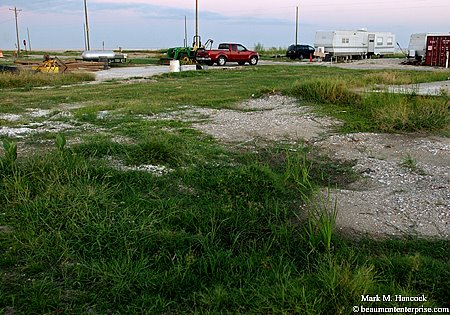
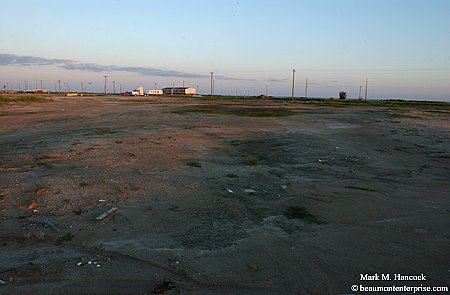
Below are the images of recovery. Many of the compositions appear strange or random. By normal accounts, most are quite boring. However, click on the link under each image and see how the same scene looked about a year ago.


Photos by Mark M. Hancock / © The Beaumont Enterprise
Now:   William L. Snyder II, owner of B&B Enterprises, poses for a portrait outside his auto business in Orange on Wednesday, Sept. 13, 2006.
Then


Now:   The Target store in Beaumont is fully repaired and operational on Friday, Sept. 15, 2006.
Then


Now:   O'Hare's Market and Grill on Dowlen Road in Beaumont has changed its lease arrangement and is now Gator West Mini Mart on Friday, Sept. 15, 2006. It reopened for business in mid-July, it was previously damaged after looters smashed the front doors.
Then


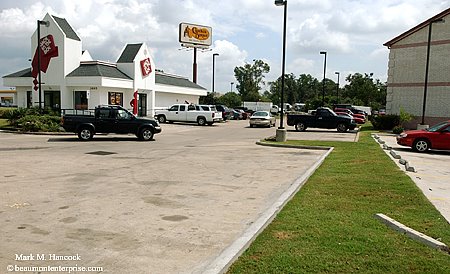
Now:   A crushed sport utility vehicle with Louisiana license plates was removed from under a Jack In The Box sign and the store has been repaired and is operational again by Friday, Sept. 15, 2006.
Then


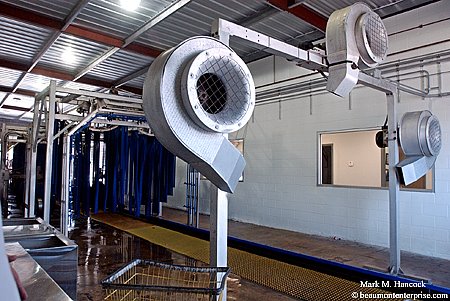
Now:   Johnson's Xpress Lube has been repaired and is operational by Friday, Sept. 15, 2006.
Then


Now:   Southeast Texas Regional Airport has removed the secondary tower and returned to normal operations by Friday, Sept. 15, 2006.
Then


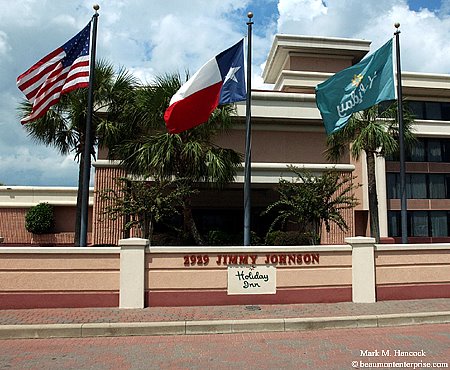
Now:   The Port Arthur Holiday Inn has been repaired and is back to normal operation by Friday, Sept. 15, 2006.
Then


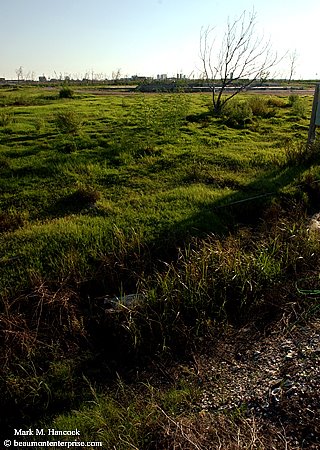
Now:   The parking lot remains empty by the severely-damaged Port Arthur Civic Center in Port Arthur on Friday, Sept. 15, 2006.
Then
 

Rita anniversary: Louisiana

Below are the images of Southwest Louisiana's recovery in Cameron Parish. Many of the compositions appear strange or random. By normal accounts, most are quite boring. However, click on the link under each image and see how the same scene looked about a year ago.


Photos by Mark M. Hancock / © The Beaumont Enterprise

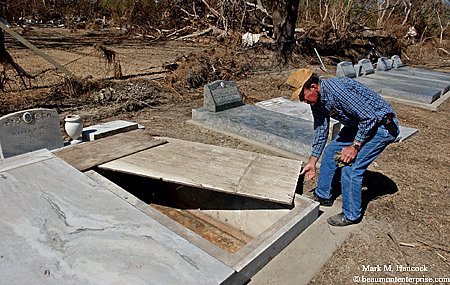
Now:   Boyd Nunez, 77, poses for a portrait by his father's grave in Oak Grove, La. on Wednesday, Aug. 30, 2006. His father's coffin was moved 300 yards by Hurricane Rita's storm surge. He had to have a new vault cap made to have his father's body returned from the county.
Then


Now:   The home of Louetta Nunez has been largely repaired in Oak Grove, La. by Wednesday, Aug. 30, 2006.
Then


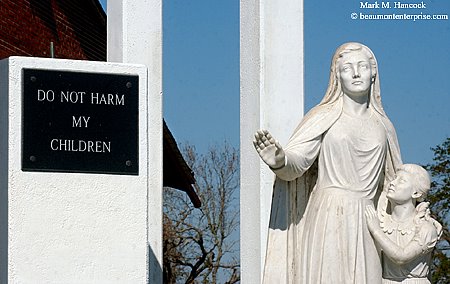
Now:   A statue has been returned to its pedistal at Our Lady Star of the Sea Catholic Church in Cameron, La. by Wednesday, Aug. 30, 2006.
Then


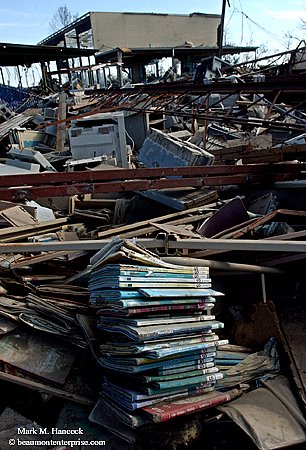
Now:   The Cameron Parish Library and elementary school have been cleared in Cameron, La. by Wednesday, Aug. 30, 2006.
Then


Now:   A dead alligator as well as Cameron Elementary School have been removed from Cameron, La. by Wednesday, Aug. 30, 2006.
Then


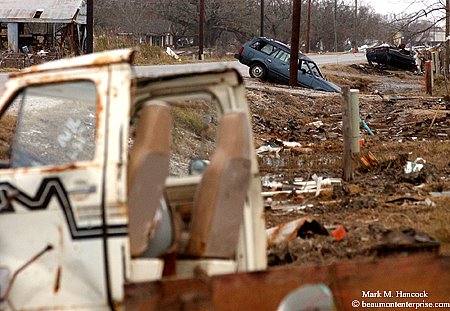
Now:   Most abandoned vehicles have been removed from Cameron Parish, La. by Wednesday, Aug. 30, 2006.
Then


Now:   The water tower remains and emergency services are returning at Holly Beach in Cameron Parish, La. on Wednesday, Aug. 30, 2006.
Then


Now:   A buried Pontiac Sunbird was removed from Holly Beach, La. by Wednesday, Aug. 30, 2006.
Then


Now:   An overturned and trapped recreational trailer has been removed from Holly Beach, La. by Wednesday, Aug. 30, 2006.
Then


Saturday, September 23, 2006

Silsbee Tip


Silsbee's Sameika Buckley (No. 5, right) tries to tip the ball over Hamshire-Fannett's Memri Carmon (No. 23, left) during a high school volleyball game in Silsbee on Tuesday, Sept. 19, 2006.

Mark M. Hancock / © The Beaumont Enterprise