Monday, December 18, 2006

Holiday diet management


Market Basket offers many treats for the holidays at the store in Beaumont on Monday, Dec. 4, 2006. Holiday foods and drinks can have emotional connections and make dieting difficult.

Photos by Mark M. Hancock / © The Beaumont Enterprise


Market Basket offers a variety of wines for the holidays at the store. Beer, wine and other alcoholic drinks often have significant calorie counts to consider.


Market Basket offers a filet, lobster tail and wine gift set for the holidays at the store in Beaumont. While sugar is the main temptation, don't forget about fat content.

Please read "Learn how to manage your weight during this hectic season" by Jamie Reid.
 

Sunday, December 17, 2006

Main Street Market


Photos by Mark M. Hancock / © The Beaumont Enterprise

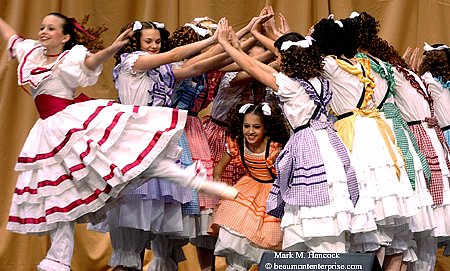
Dancers from the Marsha Woody Academy of Dance perform during A Very Merry Main Street Market at the Beaumont Civic Center in Beaumont on Saturday, Dec. 2, 2006.


Kalyn Giesecke, 4, and her mother Kara Giesecke of Beaumont decorate a gingerbread house during A Very Merry Main Street Market.


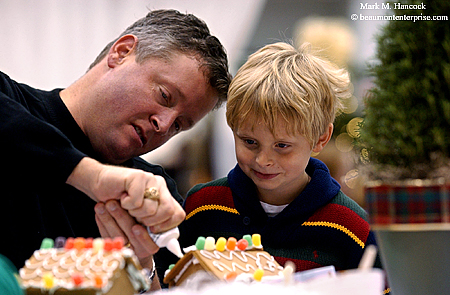
Mark Shannint and his son Nicholas Shannint, 7, (right) decorate a gingerbread house during A Very Merry Main Street Market.


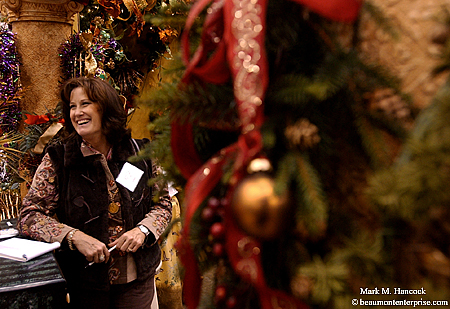
Sabrina Gray with Frey's Florist of Orange laughs with a customer during A Very Merry Main Street Market.
 

Recognize photo clumps

During December, PJs document many community activities relating to the holidays. As I mentioned in a recent comment section, I post some here to make local readers happy.

I do so with trepidation, because I don't want new readers to think I consider them to be photo stories.

Due to the low light, motion and so forth, they present PJs with visual challenges. But, so does solitaire. Both have about the same long-term affect on everyone except the subjects of the images. For the subjects, it's probably a life-long event to be in the newspaper. I'm happy to have helped.

To the other thousands of readers ... put the black three on the red four.

I plan to write some posts about photo story definitions soon. However, I want to deliberately stress the images above are not a photo story. At best, it might be a photo essay because all images relate to one event. In practical terms, it's a "photo clump."

It's a clump (spelled CL, not D) of photos from one event. There is no narrative or meaning to these images other than happy, pretty people at a happy, pretty people event.

There's nothing wrong with the event or displaying a group of photos from one event. It happened, it was documented, names are spelled correctly and everyone is happy. The subjects are happy, some readers may be happy and the paper is filled. No problems.

BUT, it's not a photo story.

Since it's December, all the good little PJs are combing though their files from this year to have their images ready for the 1st of January (contest season). Now would be a good time to, at least, be able to identify a clump of photos. Consider the post above as an example. I have others on this blog, but remember I must fill space here at times as well since the posts are daily.

If PJs look at the photo story section of my portfolio, they'll notice not all stories have a similar structure. This is because several sets (about half) are actually photo essays rather than stories. At least none are photo clumps (in my opinion).

There's a nice photo story about to hit around Dec. 31. It's been saved as a draft since before Thanksgiving. It shouldn't be hard to see the difference between a photo story and photo clump. When submitting images for competition or job applications, it's necessary to understand the difference. Those reviewing the images do.

Enough for now,
 

Saturday, December 16, 2006

Cold parade

Jennifer Franklin, 12, of Mauriceville (left) holds family friend Liam Mahoney, 3, of Orange (right) so they can both be warm as they wait for the annual Orange parade in Orange on Thursday, Nov. 30, 2006.

Photos by Mark M. Hancock / © The Beaumont Enterprise


A float passes in front of the First Presbyterian Church during the annual parade in Orange. The church held an open house and offered coffee and coco to cold parade watchers.

"Cold" is relative here. One reporter from Baltimore said, "It hits 60 degrees here and everyone breaks out their parkas." What's new to me is how they report cold weather here. In Dallas, we had ice a few days each year. Most people stayed home because the city isn't completely prepared for ice.

Here, they report how many hours it will freeze by city. When it was finally going to freeze in Southeast Texas this year, Jasper had a six-hour freeze warning while Port Arthur had a one-hour freeze warning. Two days later, it was back up to sunny, 70-degree days.
 

Experienced PJ opening HERE

The Beaumont Enterprise, the leading daily paper and online news source in Southeast Texas, is seeking an experienced, creative, self-reliant and motivated photojournalist to shoot in a team-oriented, content-rich environment for a paper with a tradition of public service. The successful candidate will have a nose for news, a knack for story-telling and be able to find, develop and bring to life compelling stories for a paper that believes in the power of photojournalism and its potential for online applications. Competitive salary and great benefits. Send cover letter, resume and portfolio to:

Pete Churton, Assistant Managing Editor
The Beaumont Enterprise
P.O.Box 3071, Beaumont TX 77704.

Complete application packages need to be in Beaumont before Friday, Jan 5, 2007.

The info above is the official company line. What follows are my thoughts. Please don't confuse the two.

Jennifer is moving to Galveston as their new photo editor. It's been great to work with her. I wish her all the luck (except in direct competition). She is funny, smart, tough, hard working and will be missed.

To be fair, this job is for an experienced, competitive, detail-oriented photojournalist who knows how to transmit on deadline from the field and is ready to be slammed by a hurricane. With changes currently taking place, this job is NOT for technophobes. Video knowledge is a definite plus.

A four-year degree is required. A PJ degree is preferred. Five years or more experience at a daily paper is preferred.

Beaumont is a Hearst metro newspaper. As such, it directly competes in-house against some of the top newspapers in the country. Additionally, it has good benefits and is privately held. Because it's not publically traded, it's far more stable and the focus is on content rather than stock prices.

There is enough experience on staff to handle a minor learning curve if the perfect candidate comes along. We also have the coolest A.M.E. in the biz. The down side of this job is the successful candidate has to work with me and must tolerate my dumb jokes. ;-}

The paper provides high-quality content and expects a high-quality photojournalist. Among other awards, it was named as this year's top newspaper in its division at the Texas Press Association Better Newspaper Contest. Awards from only this contest include:

Sweepstakes Winner (1st)
1st General Excellence
1st News Writing
1st News Photo
1st Headline Writing
1st Feature Story
1st Community Service
2nd Page Design
4th Editorials
4th Sports Coverage

Since I got a job here, candidates might be wise to look through the information I've posted in All PJ-related posts about getting a staff job. Of particular interest should be How to make portfolios, Make a cover letter, Make a resume, Complete the application package.

When applying for any job, mention you saw this opening on this blog (PhotoJournalism). Good luck.

NOTE: If you applied for the last job opening, those resumes are on file, e-mail Pete and let him know you're still interested.

Enough for now,
 

Friday, December 15, 2006

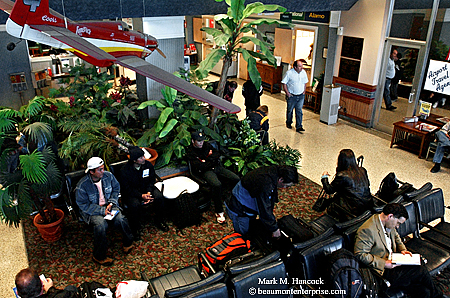
Airport terminal


Mark M. Hancock / © The Beaumont Enterprise

Passengers wait for a flight to Houston in the terminal at the Southeast Texas Regional Airport in Nederland on Monday, Dec. 4, 2006.

Yes, I'm posting "lemonade" images this week so y'all can read through the interview with Matt Eich.
 

Thursday, December 14, 2006

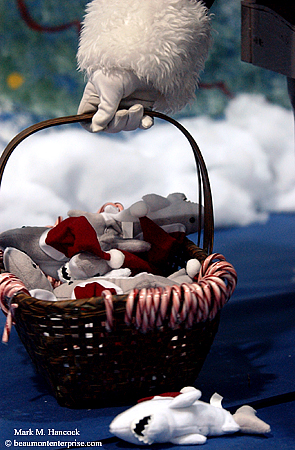
Sabine Pass Santa


Katherine Smith, 11 months, doesn't like Santa during the 2nd annual Winter Festival at the Sabine Pass School in Sabine Pass on Wednesday, Dec. 6, 2006.


Photos by Mark M. Hancock / © The Beaumont Enterprise


Santa Claus reaches for his basket of Santa Sharks, the school mascot, during the 2nd annual Winter Festival at the Sabine Pass School. Hurricane Rita made landfall over the small Gulf Coast community more than a year ago. Although many residents remain in FEMA trailers and even tents, the community gathers at the school to celebrate the season.

Wednesday, December 13, 2006

Matt Eich interview - Part B


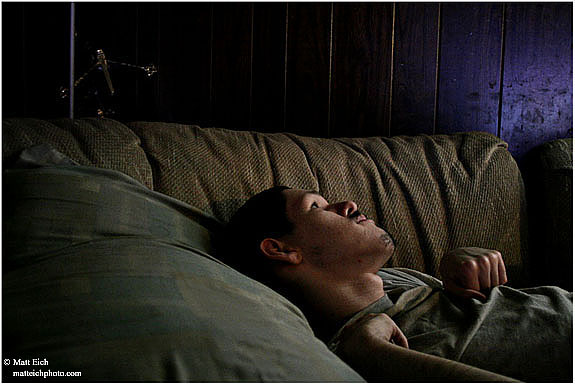
© Matt Eich

Timmy Goins, 25, of Chauncey, Ohio is mentally handicapped and has cerebral palsy requiring around the clock care.

Please read Matt's bio, Part A of this interview and see his images.


Your internship with The Orange County Register seemed to have been an eye-opener. Please talk some about your internship and what was so different about California?
(laughs) Everything was different about California. Coming from Ohio, where the drivers are really, really bad - there's one interstate around here and everybody goes the speed limit - to being dropped in the middle of this strange, foreign place with a whole bunch of really weird people with lots and lots of money that drive 20 miles over the speed limit. It was a jarring experience.

Everybody is wired differently on the West Coast somehow. I'm an East Coaster, but I've been living here in the middle of nothing for the last couple of years. It was nothing I was used to.

It was an eye-opener in that I was working with a really talented staff of people. I was "The Intern." The Coffee Boy. I had to prove I could do an assignment. Once they realized I was capable of keeping up with the stuff they threw my way, they started chucking assignments at me and they were really good assignments. The editors really wanted to see me succeed.

It was a give-and-take thing. Whenever I did really well, they'd give me another good assignment. They were really nurturing and encouraging and tried to see some potential in all these hap-hazard frames I'd end up taking.

It was a good experience, not only photographically, but in terms of (laughs) exploring the United States and learning more about those weird people on the Left Coast.
After your National Geographic internship, are you looking for additional internships?
I've been applying to Fall internships and Summer internships as well - just to see what I can rustle up. I'll fill up whatever space around them Geographic happens to have free.
How are you pacing your college experience?
That's been an evolution. I rushed through high school. There was a girl I was dating that was about two years older than me. She was in college, and I wanted to be in college too. So I just scooted right out of here early and came into college with the same kind of mentality.

Then I was like, "What's the point?" (laughs)

A few weeks ago I started thinking about taking it as it comes and not trying to cram it all in. Life happens too fast anyhow without me rushing it. I'm just going to play it by ear.

That's where the music comes in handy I guess. I was never good at reading music.
You're going to be a junior this year. Typically, the CPOY is a senior and is already a struggling pro by the time the award is announced. Does staying No. 1 put any additional pressure on you for the next two years?
(laughs) It really does. The day after the awards were announced, I was trying to get through some B.S. class work, and I started thinking, "Man, I wish I hadn't won the contest or crap." It was just a couple of people's opinion. I don't think I deserved it. Now I've got to live up to this and what's more there's going to be that voice in the back of your head - whether you want it there or not - saying, "Come on, take it easy. You've accomplished X, so you don't need to do all your Z while you're in school." So there's a threat of a lack of drive.

That's going to be a question of staying focused and staying passionate. I've heard more people then I care to recall say, "So you won CPOY. When are you going to burn out now?"

A lot of people that have won it have completely fallen off the map. That's the last thing in the world I want to do.

[I must] keep stamina and keep driving and pushing and remember what I'm in it for, which isn't the contests. It's a really easy way to get derailed.

It's got its benefits, but it's got its down sides too.
Pressure to win again?
Yes, kind of. My friends have been hassling me about that already. I don't know if I'll even enter again next year. But at this point, it gives me something to shoot for. "Last year, you made this body of work. It was OK. It got recognized. So, how can you do better?"

It sets the standard and now I've got to up the ante a bit. Even if I don't enter, that's something to shoot for.
Are you leveraging your award to get freelance gigs? If so, how's it working?
Actually, I haven't been trying to do that at all. Most of the places I've applied for internships have heard by word of mouth. I printed my portfolio books before the award, so it's not even listed on the resume.

Freelance, I really haven't figured out how to milk it yet. I was thinking about going up to New York, but I know everyone is going to be stressing about the holidays. I'm just ready to go home and see my family.

I did get a freelance gig from the AARP Bulletin because of CPOY. That's what I was shooting today. I don't know. It was amusing. A little stressful, but it is some work. So, yes, there is some benefit from that.
What advice do you have for young photojournalists?
I've gotten a couple of e-mails from people asking, "What does it take?" That's something I'm constantly asking myself [and] asking professors.

For me, and everybody is different, it took a lot of drive and focus. I was eating, breathing, sleeping photography. I was always looking at someone's work if I wasn't looking at some seasoned professional's work, and checking out books in the library. I was looking at some recent project on Blueeyes magazine or looking at a classmate's work.

It's constant absorption of these different photographic materials. One of the first things they teach you here is, "The more you know, the more you see."

I've been thinking more about the emotional and psychological aspects of photography as opposed to the technical. I'm trying to figure out how I can smooth over all these technical things from exposure to composition so it all becomes automatic. So I can go straight into the meaning behind the photograph.
For younger students?
Study. Figure out what you're passionate about and focus on that. Not everybody is going to want to do documentary work. Some people want to be the next Bill Frakes, so they should look at a lot of Bill Frakes.

Constantly be shooting. The people who really care about photography here at OU, wherever they go, you see them toting their cameras around. They're always photographing their life outside of the projects they're doing.

That's something that's been really crucial for me too: photographing family members. One of my portfolio shots was of my mom and my sister this year.

I think [for] people who truly, deeply care about photography it's something that's going to transcend their daily life. It's not a day job. It's just something they do. That way, you love what you're doing because someone is going to pay you to go out and take pictures of someone else's life, but you're already taking pictures.
How did you start in photography?
I guess I was about 10 when my grandpa gave me a camera. It was a point-and-shoot. Just to document a road trip he and I were going to take. I remember one photo I took. We went to Cades Cove park in Tennessee. I took one really bad landscape photo I really liked at that point in time.

That sparked a little bit of something, enough for me to pick up Mom and Dad's camera. It was a Nikon N2000 with a 50mm lens. I guess I was probably 11.

Then, I worked all summer mowing lawns and odd jobs to save up for a camera. My dad really likes telling people about how I walked into the Ritz Camera store and dumped a whole bunch of nickels, quarters and dimes out on the counter and asked for an N-70, which at this store was the coolest thing they had.

(laughs) The looks I got from the people that worked there.

I was reading lots of photography magazines - just about anything I could get my hands on. It was mostly nature photography that mainly interested me. I took photos of my younger siblings a lot too.

I started shooting slide film because I really liked the colors. I think that helped me a lot with the technical aspect of getting the exposure right.

I did a workshop with John Shaw, who's a nature photographer that I really admired at that point in time. He looked at my stuff, patted me on the head and gave me some free film. That was encouraging and cool.

One of the things that really kicked it towards photojournalism was the Truth with a Camera Workshop when I was 12 to 13. It was the first year they started doing that. Mom heard about it and she took me there on opening day.

I got to see what work was being projected. Jim Blair, a National Geographic shooter, was talking about his work. He was kind enough to look at my stuff and was encouraging despite the 12-year-old's content.

I later found out one of my favorite photographers, Rich Facun, who's with The Pilot now, that's where he found photojournalism too was that same day, that same workshop. He was college student at the time and decided to completely shift gears. It's just one of those cool, shared events.

I enrolled in the Truth with a Camera Workshop right after high school before I came to OU. (laughs) They taught me I didn't know anything about what I was majoring in.
How did you choose Ohio University?
I heard of its reputation. When I was researching schools, OU, [University of] Missouri and Western [Kentucky University] were the top three [universities] everybody talked about. I was thinking about the Corcoran College of Art and Design because it was in D.C. and closer to home. They seemed really inviting when I was there.

When I came to OU, something just clicked and I didn't even visit Missouri or Western when I found out about OU. I just grabbed hold of the opportunity.

I don't know why they let me in because my stuff was pure crap. (laughs)

I think it's a person-by-person basis. If they see something or some potential in you, they take risks. I'm glad they took that one.
What's missing in your education?
From my peers I hear it seems like the newspaper world is shrinking. I wish they were teaching us how to freelance so we could actually make it when we get out of school if we don't have a newspaper job.

There are a lot of people that have been thrown into the freelance world that seem to not know what they're doing. They have to feel it out. That can be difficult, especially if you've got to support a wife or kids while you're going about that.
Is it important to freelance while in college?
It's been extremely helpful for me. Before I could get an internship, before I was interested in an internship, I was freelancing at The Pilot. They were giving me sometime three or four assignments a day.

That taught me how to turn stuff around on deadline, how to shoot something publishable, tone, caption and they were very forgiving when I made little college kid errors. They didn't ever give me anything big when I was first starting off with them because of that. But, it was a really good foundation.

This past summer, I wandered around and freelanced for The Fader magazine and that taught me how to be resourceful if you end up in some place, you don't know where you're at, you don't know how to get in touch with anybody, the shoot's not going well, and you've got to figure out some way of making a publishable image your editor is going to be happy with.

It's also a way of sustaining yourself. It's not like most of us are making much money one way or the other, so freelance offers that opportunity. You're building connections and working with other people. There's lots of built-in benefits of freelancing while you're still in school.
How will other students who don't freelance do upon graduation?
It really depends on the person. They could go out and get a great newspaper job. A lot of them, that's what they aspire to. Some people want to walk out the door and be ready to freelance. That's not necessarily being taught depending on the curriculum.

Across the board, everybody would benefit by having some foundational years of technical things being taught. I keep hearing students say they wished teachers would teach more about the emotional and psychological side of photography and how you can take it to that next level.

That's where I feel a lot of professors here at OU are excelling because they do push that. They want you to think beyond the very bare bones of it and into some of the other realms.
Is it good or bad to take internships?
It depends on the person and the internship at the time. I was offered an internship at The Pilot [at] the beginning of my sophomore year. I turned it down because I would have missed a core class, which was really important. I'm really glad I turned it down because I learned a ton that year.

Now - in theory - (laughs) I could go back and maybe be an intern there later and do a better job for them now that I've learned what I did in school. Sometimes internship opportunities come up and publications have needs to fill positions with warm bodies.

Students are warm bodies, and they're cheap labor. The students need to realize that. So, it's not something they should always jump on if they're offered an internship. They need to figure out how it plays into their life and their classes on a case by case basis.
How important is competition in the industry?
That's something I have limited experience with. I'm still in school, and it seems like it's pretty competitive out there. I think one of the good things about college is you can build a network of camaraderie and trust among the student body. Hopefully, not only at your school, but at other schools as well.

I just met some students from Western Kentucky. They were really cool guys. We're going to start sending our work back and forth and keeping in touch and inspiring one another because everybody's learning different things. We're all in it for the same reason. So, we may as well push one another as best we can.

Competition in the industry seems really prevalent, especially in the freelance world when it comes to saying, "This is what I can offer you. I can do your assignment. I can do it in a way nobody else can."

There's got to be something that makes you unique and to market to [get] any business. That's at least my perception of it at this point.
Are you successful in the profession?
(laughs) Not by any stretch really. I certainly can't make enough to support myself if I were trying to.

There's always going to be on days and off days. I just did an assignment that I thought was going dreadfully wrong. I had to go scramble and find somebody new and crank it out. It ended up working out.
What have you discovered about the profession that you did not expect?
I really didn't expect much. It's been a road chocked full of surprises and realizations not only about photography, but myself and art and the world I live in. That's what I love about it is it's constantly got me on my toes.

Just this past week I attended the Atlanta Photojournalism Seminar. I saw a piece by Kristen Ashburn with Contact Press that she had done with Media Storm called "Bloodline." It blew my mind.

That was something about music. Every now and then you hear a song that will send chills up and down your spine, and it's the same way with photography. I can see a piece sometimes that really grabs my heartstrings and makes me say, "That's why I'm in this. That's what I'm doing this for."

The thing I realized is photography is communication. It's just like you and I speaking, but it says something totally different.

Everybody wants to be heard. Everybody wants to be able to say something unique. She said something really powerful and really unique with those photos that were so technically flawless that even the most anal retentive photographer couldn't get hung up on any technical aspects of her images. It just became a pure flow of communication.

Because she combined audio and video with the still images, it was these people speaking to me. They're speaking to the viewer.

That made it incredibly moving because a lot of photographers take pictures and you see more of them in the photographs than you do of the subjects. That's something I fear in my photographs and something I'd like to grow out of. I think that's kind of a sophomoric thing.

Her stuff really transcended that. It took it to a different level for me. That's one of the many things I've had running through my head about photography recently.
How important is it to be technically proficient?
It's something that needs to be foundational. Once you get it down, don't worry about it so much and let it flow. Let it happen. Take risks. Make mistakes. Paolo Pellegrin is one of my favorite photographers. There's a lot of photos of his or [Antonin] Kratochvil. A lot of photo professors would look at it and say, "This kid gets and F. It's not in focus. It's blurry."

But, there's a feeling in that photograph that anybody can access. It's easily understandable. It goes beyond the technical aspects of the image.

I think [students] need to get the technical foundation down first before you can justify it to any publication or a professor. You have to understand what makes a good photograph before you can break those rules.
What are your thoughts on flash or studio lighting?
I think they've all got their place. I'd like to be better at studio lighting. There's a lot of people that are really, really proficient at it and can make some very moving photographs that way.

Generally, I find flash to be obtrusive. There's certain subjects that when they know they're being photographed are OK with it. Your presence is accepted. Then, you can go in and do what you need to do. Other times, it's something I want to avoid because I don't want to draw anymore attention to the fact I'm there and taking pictures.

I try to go incognito whenever possible - dress down, don't carry tons of cameras. I don't wear a photo vest.
Bag?
Occasionally, but generally it's a really small bag that can just carry a couple of lenses.
Anything to add?
I think Casey said it last year, but if anybody's got any questions, I'd be really happy to ramble at them. (laughs)


Matt welcomes feedback through e-mails and calls from anyone who would like to contact him.

Enough for now,
 

Tuesday, December 12, 2006

Matt Eich interview - Part A


© Matt Eich

Richmond, VA: Love's ghost.

Please read Matt's bio and see his images.


Daniel Berman, a high school student in Seattle, asks,
"1) Which photographers consistently seem to inspire you?"
That's a hard question. Before I got into photography, I was really into music. The thing among people who listen to a lot of music if somebody asks what's your favorite band, and you'd say, "Well, this week it's so-and-so."

It's kind of like that with photography. It comes and goes and depends on my mood. Eugene Richards is someone who's always inspired me ever since I first saw his stuff. The same for [Antonin] Kratochvil. Recently, I've been really into Alec Soth's work. He's got a different way of seeing that's really cool.

Even among my classmates here at Ohio. I'm just consistently amazed by the stuff they're cranking out. So I think it's even more inspiring to have someone here that you can talk to and relate to and understand what they're going through and what they're thinking with their photographs rather than some far-off photo figure, who's publishing books and is old enough to be your father.
"2) What do you feel has been the best help to you in developing a personal vision?"
Personal vision is one of those finicky things that comes and goes. Sometimes you feel like you're saying something with [style]. Sometimes you feel like you aren't saying anything.

I never really thought about it. It just happened.

I guess it's a question of how you feel when you're shooting oftentimes. I've noticed the style and the personal vision attached to any specific photo really varies on how I'm reacting to a scene.

If I'm feeling really deeply for the person in front of me, it's going to look a lot different than if it's someone who really rubs me the wrong way or comes off as arrogant or something like that. I try to pick up on people's personality traits and photograph them accordingly.

So, I think style is an evolving thing, and I hope I grow into it to some extent, but not to the point where it becomes formulaic. I want it to always be something that's growing and evolving with what I'm shooting and, at the same time, I feel like I need to be respectful of my subjects and not let the personal vision or style overpower what they're trying to say.

One project I've been working on for a while is on this town called Chauncey, Ohio. I really tried to simplify my style when I was shooting there. I was trying to make it so it was just the subjects coming through and it wasn't my input. So I would see less of me in the photographs and more of them.

The more I shot, the more people kept saying, "I see you're finding your style." (laughs) That was not at all what I was going for there. So, it comes when you're least looking for it. It's not something I've actively pursued.
Marie Freeman, a pro in North Carolina, stated:
"Wow. Love his sense of balance in all of his portraits."
Please talk some about balance.

In portrait situations, I try to walk in and figure out what's going to contribute and what's going to detract from the portrait. What it's about. I try to make it pretty clean generally, but at the same time say what I need to say about the subject. Of course light plays a factor in all that.

I feel like that's mostly what I've been doing for freelance lately is portraiture work in one sense or another. What one person told me when I was looking for advice was, "Everything is a portrait. If there's a person in there, it's a portrait. It doesn't matter if it's posed or not." That kind of clicked with me and made sense.

Even documentary work you need to treat with the same respect as you would with a portrait where you're sitting down and talking with this person. It doesn't mean you're posing it or setting it up. It just means you're trying to get as close and personal as you can with this individual.
You played piano for 12 years as well as learning guitar and drums. Talk some about the relationship you see between music and photography.
Growing up, music was a really important part of my life because it was a means of self expression. There came a point where I had to choose between music and photography. All throughout high school, music was a way I connected with my peers. We'd play in bands together. We'd go play shows. We'd go see shows. We'd talk about music. It was a way of relating to people.

Photography was something that nobody I was hanging out with was into. So, it was an odd choice, but I felt I could articulate myself better through photography. I felt I really wanted to do something that was about the people, about social issues, for a career. I felt photography would be a better shot at that as opposed to music.

It's really easy in any art form to get caught up in the "I'm an artists. I'm creative." However, it seems easy to get stuck in that rut if you're playing music - at least in the scene I was growing up in. That was something I wanted to avoid.
Did you cultivate talents to apply directly to photography?
Definitely. A lot in editing. I try to think of a story or essay as a song. So, it's got to have a beginning and climax at different points along the way. Most of the time when I'm editing, I'm listening to music. I'm trying to think if this is slow. Is there something that throws it off. Is there a dissonant note in there somewhere that's going to really sink the ship.

Then there's timing when you're shooting as well.

Playing in bands taught me a lot about working with a group of people, which seems to play out more in the newsroom. Photography can be a lone wolf activity a lot of times. But that experience, trying to interact with a group of people and saying, "Do you like this? Do you like that? How can we make this work?"

That helps in some aspects of photography. The group mentality.
What's Emo-rock?
(Laughs) Emo stands for emotional. It was a term coined back in the 90s at some point. Sunny Day Real Estate were really foundational in that. It was defined by groups that would get up on stage and start crying and screaming and doing emotional things. They get kind of overcome with their music.

It became really trendy a couple of years back. It burned out. It's kind of a big joke now. It had some offshoots like emo-core that was harder stuff, it was closer to metal. It's generally pretty melodies, but really sad, depressing lyrics.

It also became a style in terms of the way people dress. That was a big part of the music scene when I was growing up. So I guess it's something I've kind of carried with me throughout school. Like those kids that grew up during the hair-metal stages in the 80s that never quite got over that. I guess I'm kind of like that way with the Emo-rock thing. I don't listen to it as much anymore. I've grown out of that phase, but it is a joke here in the photo program.
Do you still have a band?
I haven't really been part of a band in a while. The first year I was in college, I'd go home and work on a solo project with a friend of mine. Just recording stuff, but it never amounted to anything. I still like jamming with friends. Both of my younger sisters are really musical, so they always want to play music when I get back home.

It's always a release. That's a part of me. I can't really push away even if I get caught up in photography. There's only so much that I can let out with pictures. Music seems to complete the circle.

Whenever I get home and there's a piano there, I can sit down and mellow out. It's always therapeutic.
What do you think about performer's rights-grab contracts?
I don't shoot many concerts. If I'm going, I try to enjoy the music. I've shot a couple of freelance gigs and never ran into any rights-grab things.

What are the current PJ educational trends at Ohio University?
It really depends on the instructor. They come from varied backgrounds. Some are old AP shooters, some are editors, a couple of them worked for Geographic back in the day, that kind of thing.

They really push. Their faculty members, specifically Bruce Strong, who's been a huge mentor for me since I've been here, and Stan Alost, who was the professor last winter when I shot most of the stuff in my portfolio right now, have a knack for taking it beyond the technical and pushing it into more of an emotional realm. Like, "How are you responding, reacting to this and that? How do you feel? How does that affect what you're shooting?"

Everybody responds in different ways. Some people look at photography as a mathematical formula. Add good focus and good exposure and good this and that and you'll have a good picture. But, most of the professors here are very accepting of style. They want to understand what's making you - as an individual - tick. They want to push you in that capacity.

They're willing to sit down with you outside of class and say, "How is life? What are you going through? This is what you've been shooting. I think you could improve it this way."

Stan's really good about not handing anything to you. He'll sit down, and he'll say something completely off the wall that makes you really confused. You have to go and decipher what he says and then shoot something and turn it in to him.

It's a lot to do with the faculty and a lot to do with the fact that they have a lot of good students all in one place. It's a photo community. We all go out and hang out together outside of class. We're editing one another's work non-stop. When we go out to the movies, you see 10 people walk into the movie theater with their cameras. We're always taking pictures. It's the photographic life in this community that's lived out.
Is the community accepting?
It really is. It's strange, the program's been around here for so long and everything's been photographed at least once or twice. Still, people go back and shoot the same thing over and over and over again. People just go, "It's this year's batch." (laughs).

There's been a couple of cases as the years have gone on that somebody's rubbed someone the wrong way and no photographers are accepted in those specific locations anymore. But, that's kind of few and far between.
How does access compare to Virginia?
When I've been there, I've been freelancing for The Virginia Pilot, which has a really good reputation. So everybody is really accepting as well. But, they do understand you're shooting for a publication where as when you're at school they're like "Oh it's for a class. We're helping you pass. You're being studious."

There is a different acceptance and a different vibe they get off of you depending on what the motive behind your work is.
Are wet darkroom techniques still taught?
It's an elective now actually. My class was the last one required to take the darkroom class. Kind of depressing.
Is video or other technologies taught?
They're starting to explore that. Bruce Strong is teaching one of the classes, and they have audio. They've got multimedia as a separate track. They encourage people to take multimedia classes as electives at this point. I think soon they'll instill a certain amount of multimedia classes that are required because most jobs are looking for that.

I think that's something very few schools have a grasp on. Some places obviously do more than others, but OU is still experimenting with it to see what works and what doesn't. I think they're rewriting the curriculum for next year.
Are journalism writing courses required?
We're not in the School of Journalism. It's a separate school. The school is Visual Communication, but we take classes with the journalism school. This last quarter I took news writing. Before that, we took a grammar class - basically - and a few other things are required. News gathering. Those are all requirements for graduation.
Do you see writing as important?
I really do. It's something that adds a lot of weight to your work. If you can't articulate the purpose behind it, then it's hard to justify it.

My style of writing isn't like AP journalism. I tend to relate more to Eugene Richards work in Dorchester Days, where it was observations and his thoughts and feelings on things as he photographed them.

One way or another, you need to combine the two to get the maximum impact out of your work.
You said if money and time weren't issues, you would visually tackle large-scale social problems. What's your eventual goal and dream circumstance?
That's a hard question, because - from my standpoint as a student in a state of flux - a lot of photojournalism outlets and editorial publications are cutting back on that kind of stuff. It seems like to make ends meet, you need to do commercial work. You need to do advertising. You've got to do stuff that really doesn't matter, or you may (laughs) be opposed to even.

[You could be] shooting for huge corporations that you don't necessarily want to support just to put food on the table, and then doing what you want on the side. I'm trying to find a balance.

I've been really drawn to the rural issues surrounding the school because a lot of the student body is completely unaware that five miles down the road is one of the most impoverished places in the state. Everybody is in a bubble here.

That's something that makes me painfully aware of all the things going on around us. I know that's just a small facet of the problems going on.

I really want to explore that in my time here. Just see where things lead me from there. I don't have any huge aspirations as to a project I'd like to do right now other than photograph the stuff around here.

I'd like to do documentary work. That's where my heart is, but not where the living is. It's the way it's looking right now.
Applied for grants?
Yes. I've applied for a couple of things, but grants are a whole different ballgame. That's something they haven't been teaching yet in the classes here. I don't know if [it] will come later in the curriculum or it's something you've just got to do on the side.

That seems to be the best way to get funding. At this point, you're not going to call up a magazine as often anymore. (laughs) "Hey, I've got this project I want to do. You can send out a writer, and you can send some money while you're at it." It doesn't seem to be going that way from what I'm seeing.

I'm just trying to figure out what channels you have to go through to get work done.
You have an interest in poverty. Do any of the poor folks tell you they want your "job?"
There's a lot of people that express an interest in... like "That's a cool camera." Or, "Man it must be neat to just go wander around."

Very few say, "I really, really want to do this." They just seem content living and interested in doing their own thing. I think some of them think it's not something they could do. They're not really brought up to be artistically inclined or to think outside of the box. They think, "Well, my dad did this. I'm going to do this too. It seems like it's doable. If he can do it, I can do it."

That's one thing Oscar Lewis wrote about poverty and the culture of poverty. He was saying the culture of poverty is really when you're unable to relate to the fact there's other people outside of your living situation in the same boat as you. He was talking about how you may be desperately poor, but a lot of the culture of poverty is in your head, and it's what you think you can do.

A lot of these people don't think they can ever break out of it. They don't have any interest in it.

So, I don't get asked very much, "How could I do this or how could I do that?"
Since most PJs are digital now, do you think photography is becoming only for the wealthy?
I think digital is becoming more economical. One of the problems with it is (somebody) said, it's less suffering for your craft. You shoot photos. It used to be that you had to develop them and hang them to dry and print them and you stank of Dektol and all these things. Now, you've got a computer. You've got a camera. It's putting photography in the hands of the public so it's making it more accessible, which a lot of people perceive as taking away the need for photojournalism.

Reuters recently had something about accepting open submissions from the general public for work they shoot, which has its issues.

While it's expensive now, it's going to keep coming down in price. Because it's the standard now.

They seem to keep knocking down the D-50s and the Rebels and stuff into more affordable ranges, but it's still pricey. I always shutter when someone says, "How much did that thing cost?"

(laughs) I tell them the truth, "I had to take out a student loan to get this thing," and they're like "Ohhh, OK."

It is difficult because there's a lot of kids I meet that have something special that could do it, but they can't afford it. I've been photographing these deaf twins out in Chauncey, and they're only 5, but every time I walk in there, they're super sharp. They've figured out how to turn on my camera. They can take a picture. They can turn on the screen on the back. They can look at the picture.

I feel like because they can't hear, they've got a heightened visual awareness. That's the entire world to them is what they see and what they feel. It's really cool to see how they respond to being able to take pictures.

I've been really curious as to what would happen if someone gave them a camera and let them go and do their thing. (sighs) That's probably something out of their grasp for now.
I noticed your style is very loose. You use a lot of space, layers and limited depth of field. How did you develop this style?
I think it really depends on the outlet. I interned with The Orange County Register, which was a great learning experience. It was the only internship I've had thus far. I quickly learned there what was going to fly and what wasn't. I had to realize this is how I shoot and I'm going to shoot this way - one way or another - but this is what they want. So, I've got to give them both.

I'd shoot what they were going to publish. Then, I'd shoot what I was going to keep. Of all the photos from the internship that ended up in my portfolio, not one of them got published while I was still there.

I was strangely OK with that. It's just a question of being happy taking pictures that you're proud of to some extent. There's other outlets for work like A Photo A Day, Melissa Lyttle's online list serve. It's really accepting of anything you want to do as long as it's not too off the wall I guess. That's been a huge part of growth as well. Everybody on there is pretty cool and laid back and willing to offer feedback.

It's grown so much. It's like a social club now when everybody sends photos every now and then. The old crew has been really supportive of what I've been trying to do. Then, the faculty here and all my classmates. Even if we have different ways of seeing things and different styles, we become familiar with the way one another approaches things and go from there.

I tend to shoot more toward the magazine style. I think back to one of the first times I walked into the office of The Virginian Pilot, which is my hometown newspaper, and Chris Tyree was like, "I'm looking at your pictures here, and I'm thinking you're never going to work for a newspaper."

At that point in time, I thought that's all there was in the world, and I was a little hurt by it. But, I realized I guess I could take pictures for a magazine, or I could do something else. If the newspapers don't like my pictures, maybe someone else will.

It's been a journey of trying to shoot what the editor needs and shoot what the audience is going to benefit from and shoot whatever else I can. One of the editors at The Register joked on me. He was like, "Are you ADD or OCD or anything? Because you come back and you've shot everything from the flowers over there to the (laughs) rally we sent you to photograph. Some graphic silhouette of something that just doesn't make any sense to me, and I can't figure out where to go with this. As long as you give me the pictures I want, I don't care what you do."

You also have many "faceless" images. How do you determine when someone gets a face or not?
(laughs) That's a good question too. I guess it depends - in theory - the way I'd like to think of it is what they're saying with their body language if a face is going to distract from that.

The opening image of the portfolio on the Web site is of this guy Battle Loc lifting weights. He's gritting his teeth. It's got some tension and aggression to it. I felt like if I showed his eyes that would take away from the teeth and the muscles and the shapes in there. So, I just shot it cropped like that.
How about the pool table image?
I was trying to make it about the shapes. The lines of the pool cues and stuff. Generally, when somebody asks who are your influences, you list off this well-worn list of professionals everybody knows, but I'm really deeply influenced by a lot of my classmates.

One of my friends here, Noah Devereaux, is a really graphic shooter. We joke on him all the time because he shoots straight lines. That's what he does. I think some of that influence comes through in some of those images. That one in particular.
You have British awards and publications. How did this happen?
The England connection is through the Ian Parry Award. I got a commendation for a project on Chauncey. In the proposal, I focused on the youth in Chauncey.

I went over there in August. I spent about a week there just visiting with editors because they published some of the [award] images.
Assignments?
That's an assignment for The Fader magazine. She was a musician that was over there. So, I picked up that assignment while I was over there to try to make ends meet.

Her name is Emily Haines. She a singer for a band called Metric. She just put out a solo release.

The Fader magazine has been really supportive of my work too. The director found me while I was out in California and gave me some cool gigs. I got to go down to Puerto Rico for them this summer for two or three days and shot some stuff over in London and all around the country during the summer.
What did the Eddie Adams Workshop do for you?
The Eddie Adams Workshop was like a birth. It was a great experience to meet a whole bunch of people all at once that just blew my mind. I had some amazing teammates, some of which I've kept really close friendships with outside of the workshop. We kept in touch and kept sending work to one another. We hang out whenever we meet up at other photo seminars and stuff.

It's just a really concentrated group of professionals and very inspiring people all in one place at one time. I think most anybody that goes would say it's kind of a spiritual experience.

You're totally saturated with photography from the time you get up until the time you go to bed. You're dreaming about it when you're asleep (laughs) because you maybe get 10 minutes of sleep a night. Then you get up, and you've got to do the same thing the next day.

That aspect hugely motivated [me]. I got the Nikon Achievement Scholarship while I was there. That helped open some doors. It also helped me pay for school that year, so it was helpful as well.
What about the award helped?
It's got a pretty decent reputation along with it. Photography is one of those strange things where awards open doors. It's not necessarily a game we all like to play, but it does help push things forward.

After that, one of my professors e-mailed the DOP out at The Register. People tend to respond to that. If they were considering your work before, they're like "Oh somebody else likes his work."

I don't know if it's a reaffirming thing - I'm not an editor. It does allow you to make it into places that you wouldn't otherwise.


Please see Part B of this interview.

Enough for now,
 

Monday, December 11, 2006

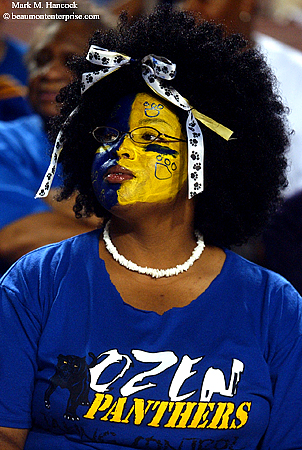
Fans support their teams


West Brook High School junior Juan Pelaez watches as Central High School gains ground against the West Brook Bruins during a football game at Lamar University in Beaumont Friday, Sept. 8, 2006.

Photos by Mark M. Hancock / © The Beaumont Enterprise


Ozen High School junior Kayla Bridges wears her face paint the last regular season game against Central High School at Lamar University in Beaumont on Friday, Nov. 10, 2006. Central advances into the playoffs while Ozen is done for the season.


Each week during football season, we had a "Fan of the Week." These were some of the better ones.

Sunday, December 10, 2006

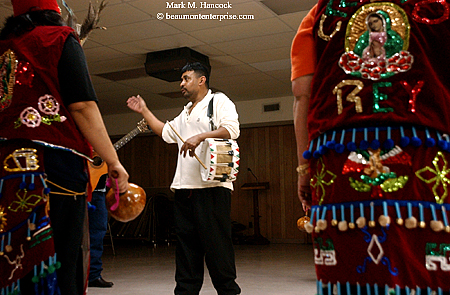
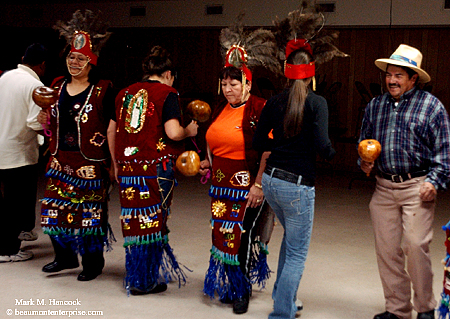
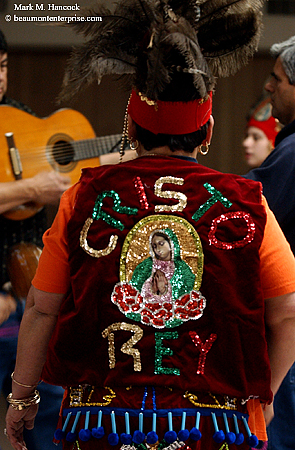
Our Lady of Guadalupe feast practice


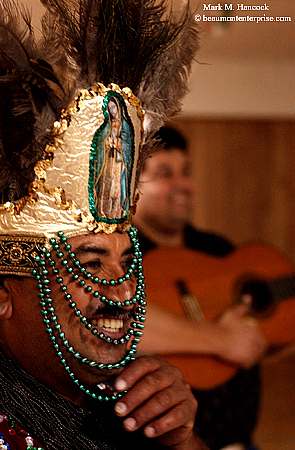
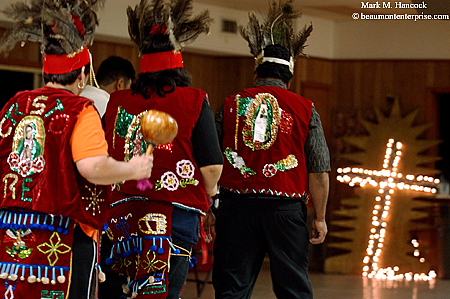
Rosalia Ortis wears a hand-made vest while she practices for the Our Lady of Guadalupe feast day at the Cristo Rey Catholic Church in Beaumont on Wednesday, Dec. 6, 2006. The feast of importance to the Hispanic community will be on Dec. 12.

Photos by Mark M. Hancock / © The Beaumont Enterprise


Alvaro Rico explains the dance steps to dancers during practice for the Our Lady of Guadalupe feast day at the Cristo Rey Catholic Church.


(Above) Dancers practice for the Our Lady of Guadalupe feast day at the church.

(Right) Araceli Alfaro practices for the feast day at the church.

The feast is in honor of the Virgin Mary who first appeared to Juan Diego, a converted Aztec Indian, 475 years ago.


(Above) Araceli Alfaro shakes a rattle during practice for the feast day at the church.

(Left) Valentin Ortis (left) laughs while Jose Flores (right) strums guitar during dance practice for the feast day at the church.

When the virgin appeared, she gave Juan Diego out-of-season roses as a sign to convince a bishop to build her a shrine in Mexico.


(Right) A lighted cross awaits finishing touches for the feast day at the church.

When Juan Diego opened the cloak to show the Bishop the roses, the now famous image of the virgin appeared. The cloth now hangs in a basilica in Mexico City.


(Below) Dancers practice for the Our Lady of Guadalupe feast day at the church.


Please read "Southeast Texans prepare to honor La Virgen de Guadalupe" by Robert Lopez.

Images are part of the faces of immigration series.
 

Saturday, December 09, 2006

Avoid anything Nygard

I was going to post some fluffy images from fashion designer Peter Nygard's visit to Beaumont during his nationwide tour of Dillard's stores. Then, I found this CRAZY rights-grabbing cattle call from "senior fashion photographer" John Bartelings (via Model Mayhem). Read it for yourself if you want to see what's absolutely unacceptable.

They wanted student photographers to follow the designer around and pop flashes to add some razzle dazzle for the TV and video shooters. The whole tour is a staged event; why wouldn't they stage this as well?

Here's the crux of it:
"(HOWEVER: NO PUBLICATION RIGHTS-SEE WAIVER FORM) they will provide their own equipment and own film/Memory Cards - NOTE: CF cards will - after download - be returned to the photographer they will follow instructions from our Staff Photographers & Nygård Officers ... they will provide their presence FREE of charge they have to sign the attached Waiver Form and return it when picking up the Media Pass..."
I'm surprised the student shooters didn't need to provide caviar and goblets of blood samples.

This doesn't apply to the media. It's actually for the media (TV). If media folks in other cities could avoid covering the event and feeding this horrible abuse of photo students (and future fashion copy-cats), please do so.

Enough for now,
 

Friday, December 08, 2006

Veteran care


Mark M. Hancock / © The Beaumont Enterprise

U.S. Army Vietnam veteran Joseph Edgerton (right) of Orange places his leg on the desk of Dr. Vincent Tran (left) at the U.S. Veterans Outpatient Clinic in Beaumont on Wednesday, Nov. 29, 2006. The Veterans Administration works to provide medical services to legitimate veterans while reducing attempts to defraud the government by non-veterans seeking services.
 

Thursday, December 07, 2006

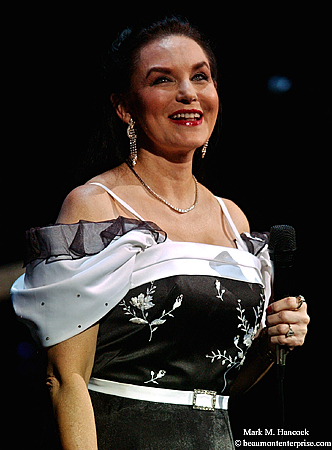
Crystal Gayle concert


(Left and below) Country music legend Crystal Gayle performs a Christmas Concert at the Lutcher Theater in Orange, Texas on Tuesday, Dec. 5, 2006.

Photos by Mark M. Hancock / © The Beaumont Enterprise

Wednesday, December 06, 2006

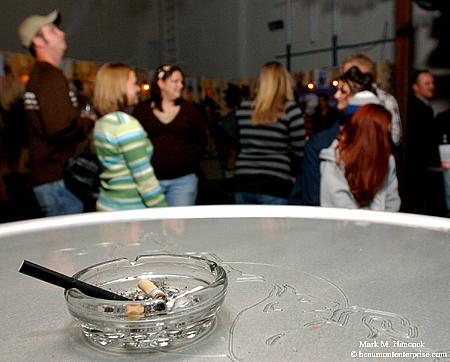
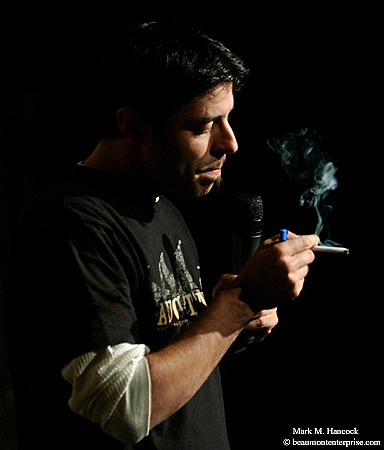
Beaumont smoking ban revisited


Photos by Mark M. Hancock / © The Beaumont Enterprise

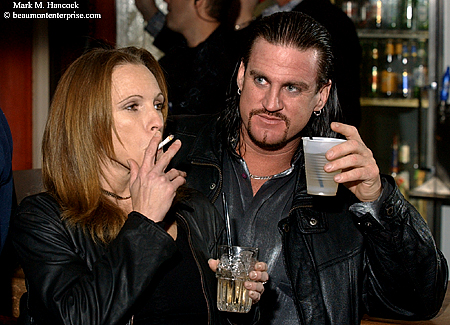
Comedy, Texas owner Slade Ham lights up a cigarette during a rare performance at his filled-to-capacity club in Beaumont on Friday, Dec. 1, 2006. It has been four months since the City of Beaumont ordained a total smoking ban. Ham was able to smoke during his act under a "performance" provision in the ordinance.


Madison's on Dowlen has spent a lot to make their outdoor patio comfortable for smokers at the club in Beaumont on Friday, Dec. 1, 2006. The smoking area has the same features and services as the indoor bar area.


Tammy Krause of Beaumont and Chris Lanclos of Lumberton smoke in the outdoor patio area at Madison's on Dowlen. The club had to hire additional bar and wait staff to handle the smoking section.


Despite winter temperatures, guests mingle and smoke in the outdoor patio at Madison's on Dowlen. The outdoor area features gas-powered area heaters to keep customers comfortable.


Comedy, Texas owner Slade Ham laughs and smokes a cigarette during a rare performance at the club. Ham backed a petition drive to overthrow the ban, but after out-of-town residents were eliminated the petition lacked enough signatures.

Please see "Smoking ban means big bucks or big problems" and "Organizer of anti-ban petition drive moves on" by Jennifer Avilla.
 

Matt Eich - 2006 CPOY

Matt Eich was born in Richmond, VA on July 11, 1986. He graduated from Oaktree Acadamy High School in 2004.

He is currently a junior at Ohio University working on a Bachelor of Science degree in photojournalism.

He has freelanced for several publications including The FADER magazine and The Virginian-Pilot and interned at The Orange County-Register. He has also been published in NoTxt magazine, The Sunday (London) Times and The British Journal of Photography.

His awards include:
College Photographer of the Year (2006)
2nd Place Student Portfolio at the Atlanta Photojournalism Seminar (2006)
Nominated for PDN's 30 Emerging Photographers (2006)
Commended in The Ian Parry Awards (2006)
$10,000 Nikon Achievement Scholarship for Best Student Work at The Eddie Adams Workshop (2005)

Additional images can be seen at: www.matteichphoto.com
He currently splits his time between his studies in Athens, Ohio and his family in Suffolk, Va.

Please also see interview Part A and Part B.

Enough for now,
 

Tuesday, December 05, 2006

Ugandan runners


Mark M. Hancock / © The Beaumont Enterprise

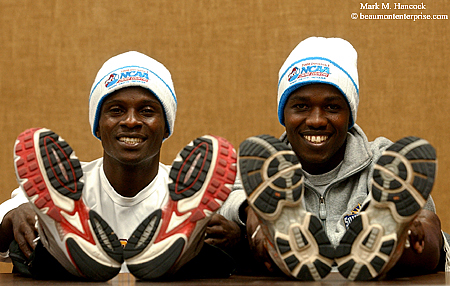
Lamar University cross country runners Francis Kasagule (left) and Samuel Kosgei (right) pose for a portrait at the university in Beaumont on Tuesday, Nov. 21, 2006. The runners are both from Uganda and qualified for the NCAA men's championship.
 

Ask a question:   Matt Eich - 2006 CPOY winner

Ever wanted advice from a College POY-winning photojournalist? Well, here's your chance again. Matt Eich won the portfolio award this year. He has agreed to an interview.

Leave your questions in the comment section or drop me an e-mail. I plan to ask the standard questions, but this is a chance for y'all to ask a specific question and get a specific answer. Please leave your questions before Friday, Dec. 8, 2006.

Please also see other interviews with previous CPOY winners Rick Gershon and Casey Templeton as well as Pulitzer Prize winners David Leeson, Michael Ainsworth and Todd Heisler for example questions.

Enough for now,
 

Best PJ universities 2006

Last year (technically earlier this year) we tried to ascertain which colleges are best for PJ students. My answer is always the same:   The university doesn't make the best PJ. The best PJ makes the most of their time at university.

For the last two years, this fact was proven when the College Photographers of the Year (Casey Templeton and Rick Gershon) were both lone wolves from their universities.

This year's winner, Matt Eich, is from last year's top (cumulative) university. He started winning awards at CPOY last year. He was only a sophomore this year, so expect two more years of rump-kicking. Alternatively, he's the target for those who didn't take the prize. ;-}

We now have two years of data to show us benefit-for-investment trends at different universities. Let's use the information we have and draw a few conclusions.

Like last year, when looking at the winners list, let's ignore who won gold, silver, bronze and honorable mention. Instead, we'll look at how many individuals from different universities got any awards. Of these winners, we'll eliminate the universities with only one winner (no matter how many awards were won) and eliminate the redundancies.

Again, what remains is a solid guess at the quality of the PJ education at different universities. If nothing else, it shows a consistent ability to teach students to shoot and select quality images for competition. Here's the breakdown by number of individual students who won any awards at this year's CPOY:

13   Ohio University
07   Western Kentucky University
07   Brooks Institute of Photography
05   University of Missouri
02   University of Nebraska
02   San Francisco State University

Ohio University won the most again. They're only down by one win, so it's an insignificant change. Both Western Kentucky University and Brooks Institute of Photography took out the University of Missouri to tie for 2nd place in total awards.

Then, the game changed. The University of North Carolina - Chapel Hill and University of Florida didn't make the top list this year. Instead, the University of Nebraska and San Francisco State University bounced into the lead pack and messed up a theory I was kicking around about pairs of shooters from one university. End result, it's not feast or famine after all.

As stated before, universities with strong programs draw strong students. These students are frequently as demanding on one another as they are on themselves. The top four universities on the list are jockeying for position, but they're consistently producing quality shooters with strong likelihoods of landing good jobs upon graduation.

Meanwhile, one driven PJ can still take all the marbles without cohorts. There were some surprising results this year (including a first-year Southeast Texan and some bloggers). Next year should be interesting.

A cool change this year is the introduction of a judges' vodcast. Now, students who can't make it to the judging can hear and see what the judges wanted. It would rock if BOP and POYi would start this as well for us poor pros.

Enough for now,
Please see the 2007 and 2008 updates.


Monday, December 04, 2006

Beaumont Christmas Parade


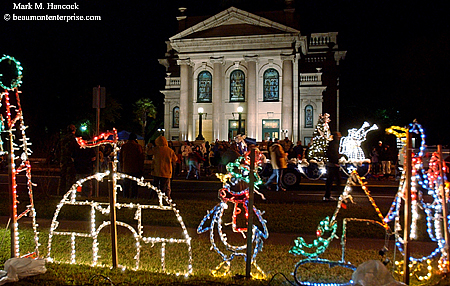
Parade fans line Main Street near the Crockett Street Entertainment District during the annual City of Beaumont Christmas Parade in Beaumont on Saturday, Dec. 2, 2006.

Photos by Mark M. Hancock / © The Beaumont Enterprise


The headlights of a truck illuminate Kerany Robertson, 5, of Beaumont as she waits for candy and other gifts during the Beaumont Christmas Parade on Main Street.


A float motors past the AT&T building on Main Street during the Christmas Parade.


The Energy Museum of Texas float passes Rio Rita's Mexican Restaurant in the Crockett Street Entertainment District during Christmas Parade.


A float passes the city's Christmas Tree outside the Art Museum of Southeast Texas during the Christmas Parade.


Santa Claus guides the final float past the Beaumont Civic Center during the annual City of Beaumont Christmas Parade.
 

Sunday, December 03, 2006

Scooby-Doo Live


Photos by Mark M. Hancock / © The Beaumont Enterprise

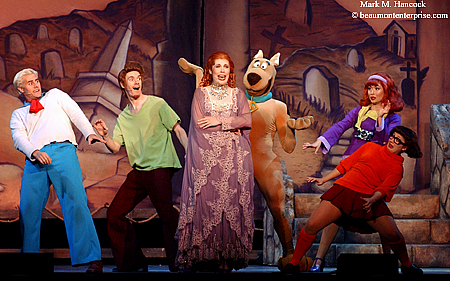
The cast reacts during a performance of "Scooby-Doo in Stage Fright" at Ford Park Arena in Beaumont on Friday, Dec. 1, 2006. The five main characters are known collectively as Mystery, Inc. They drive around the world and solve supernatural mysteries.


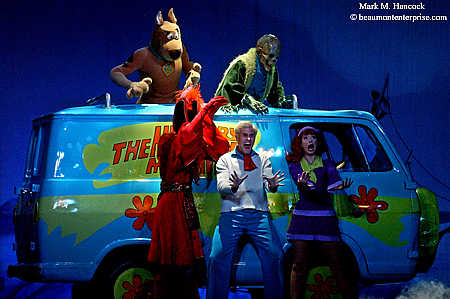
Characters Fred and Daphne (right) scream as creatures startle them by The Mystery Machine during a performance of "Scooby-Doo in Stage Fright" at Ford Park Arena. The animated television series of Scooby-Doo is the longest-running American, Saturday-morning production.
 

Saturday, December 02, 2006

Lamar's Barrow


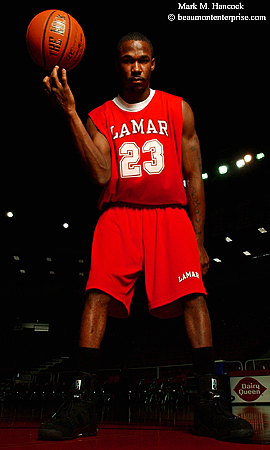
Matthew Barrow poses for a portait before practice in the Montagne Center at Lamar University in Beaumont on Tuesday, Nov. 28, 2006.

Mark M. Hancock / © The Beaumont Enterprise

Friday, December 01, 2006

Photoblog links

Photoblogs are listed alphabetically by blog name.


A Perfect Vacuum

a photo a day

behind the lens | sandip debnath

Brooks Blog

Conscientious

DVA foto

FauxtoBlog

Gnapp's photoblog

In Photos

journal

Lens Culture

Macro Art In Nature

John W. MacDonald's blog

mattw.fn_blog

Photographic Odyssey

photojunkie

Points of Light

Rood Petje

the PhlipSide

Urban Views

views of the northeast

Zen Traveler

Shinedown concert


Mark M. Hancock / © The Beaumont Enterprise

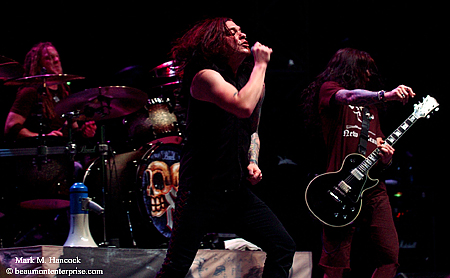
Shinedown performs during Dog Jam '06 at the Ford Pavilion on Friday, Oct. 6, 2006.

Dec. iTunes selections

* Save Me by Shinedown

* Abracadabra by Steve Miller
* Beds are burning by Midnight Oil
* Breathe by Telepopmusik
* Down Under by Men at Work
* Drive by Cars
* Gotta Get Thru This (D'n'D Radio Edit) by Daniel Bedingfield
* Groove Is In The Heart by Deee-Lite
* Missing by Everything But The Girl
* Mmm Mmm Mmm Mmm by Crash Test Dummies

Free downloads:
* Tamacun by Rodrigo y Gabriela
* Kiss Me by Robbie Williams

Check out the iTunes samples.
 

Photography info blogs and sites

Sites are listed alphabetically by category and site name. Let me know if an informational blog or Web site is missing, and I'll check it out.  Sites are removed after five years of inactivity.

Photography:

DG28 Photographer Education
Digital Photography School
Editors Weblog
New Media Musings
Operation Photo Rescue

Forums:
ClubSNAP
Digital Photography Review
DPhoto Journal
Flickr Blog
Fred Miranda
Nikon Cafe
P Base
PhotoCamel
The Photo Forum

Organizations:
Eddie Adams Workshop
photocolumn.org

Grab this graphic:


&nbsp

Thursday, November 30, 2006

Film Hall of Famer


Houston filmmaker Greg Carter accepts induction into the Southeast Texas Filmmaker Hall of Fame at Lamar University in Beaumont on Saturday, Nov. 11, 2006. He is completing "American Dream: The Mike Jones Story" for Warner Brothers, which should be released in February 2007.

Mark M. Hancock / © The Beaumont Enterprise
 

How photojournalism affects the brain

The eye is directly connected to the brain via an optic nerve. The eye and brain are in constant communication. The brain sends instructions to the eyes, the eyes respond with movement (called a saccade). The eyes collect visual information and immediately present it to the brain. Then, the process repeats.

Unlike written or spoken languages, the brain can immediately understand the massive data presented and sort for the meaning of visual information in milliseconds. Consequently, visual information is the most immediate and visceral of all communications.

While moving images (video and film) are the most engrossing, the still image is the most powerful. This is also due to the way the brain functions. Moving images force the eye to saccade as scenes change and objects move. However, the still image is frozen and allows time for the eye to fixate.

For anything to become memorable, the brain must retrace neural connections several times to build up a chemical memory. This occurs during viewers' fixations. Once the data is chemically stored inside these connections, it's a memory. It can later be called upon with another chemical trigger.

Essentially, if a still image is studied for a small amount of time, it becomes physically burned into the chemical markers of the brain. It's a chemical version of a rewriteable compact disk (CD).

Every new image encountered is compared against the previously stored mental images. Commonly, the brain might chemically say Bob looks like Ted with brown hair instead of black and green eyes instead of blue and a small scar on the left side of his forehead. When it comes to photography, previously stored images are probably very famous photos and difficult to usurp.

The most common or imperfect images in a set are dumped as better images are encountered. This is the point of impact for photojournalists. It's also what distinguishes the work of one PJ from others.

For example, let's consider a mass-market portrait photographer. Each image produced looks essentially the same. Each portrait has a person at a half-right turn with the same light and one of 25 interchangeable backgrounds.

Once the backgrounds are memorized, the people are the only difference. Once enough types of people have been photographed, only subtle changes are remembered. Over time, only surprising portraits evoke any response from the photographer.

Our portrait photographer may remember the subject in a business suit who insisted on wearing a red, foam-rubber clown nose.

So, let's build this mental image, which doesn't even exist in reality, from your own memory. First insert a generic portrait studio background. In front of this background is a head-and-shoulders shot of a person in a business suit. Then, we put a red, foam-rubber clown nose on this person.

The remaining changes are macro societal for the experience of the reader followed by minor details.

Any race, gender, or age could be applied to this generic person, these facts can be selected from previous experiences in your mind.

The minor details commonly appear at fixation points of standard images. Some fixation points are mouth, nose and eyes. These minor changes show the emotional level (happiness) of the generic person.

Let's say the person is serious for one image. But, s/he starts laughing uncontrollably as the second shot is taken. Most PJs, know exactly what the differences are without seeing the images. These neural pathways have already been traced so many times that we can easily connect arm position No. 3 to portrait No. 2 as we insert eye wrinkle No. 15 with hair No. 7, with suit No. 9 and clown nose No. 4. So, we know what the image looks like although we've never seen the image before.

An artist's view
All of this falls squarely into the hands of the art snobs who claim everything that can be shot has been shot. Furthermore, it applies to everything that will be shot in the future. This is because enough similar images have been created that the most complex composition is only a minor change from previously viewed images of someone with a vast visual memory.

This could be extremely depressing if one dwells on it too long. It means the most amazing photograph we'll ever make is only a minor adjustment from images others have already made. It also means the judge of whatever contest we're about to enter has a 30-year visual library to compare our images against in nanoseconds before s/he yells "out."

A PJ's view
Here is where quality PJ work becomes powerful. The reason the mental image above was so easy to construct was because it's made mostly of nouns (background, person, suit, nose). Probably, the generic mental construction was nothing more than a colorful silhouette of a person.

Experienced visual pros can easily assemble this image as well, but it's new to most folks and gets stored in their memory until something better overwrites it.

The verb is minor (laughs). However, the verb separated the example image from others. It's different. When the verb is inserted, the mental image of the generic person probably got mental attributes of a face. It could have been someone unknown, or it could have suddenly shifted to a well-known friend's exact face and body language.

The verb we inserted tapped into pre-existing, chemically-stored emotional bonds of the viewer. Going back to our original image, we've added several more neural connections and additional emotional meaning to the chemical memory.

This image may overwrite some other image in a viewer's mind, but could be easily lost with time and additional visual stimuli.

How PJs make memorable images
The example above was a simple portrait. It was made more memorable by the insertion of a minor verb. PJs have additional tools at their disposal.

PJs can give viewers subjects in context with authority and create sympathy/empathy. These images are most compelling when combined with a powerful action verb and strong emotional content.

Context
Most daily PJ work takes place in the "real world." The backgrounds of our images aren't painted, they're real places. Often, they're real places where our most common viewers have visited. As such, viewers immediately connect the background to their own emotional memories of the place.

Although location is important to subscribers, other viewers correlate the background to somewhere they have been. Although subtle, PJ images are already beginning to mean different things to each viewer. The image starts to become unique to each viewer as their neural synapses fire and connect visual and emotional memories.

This is most true with uniform environments such as sports. Although PJs shoot a pee-wee football game in the suburbs, the background may remind a former football player of his college football days. The backgrounds we capture are enough to make an image memorable and connect with viewers' emotions.

Authority
In addition to the context mentioned, PJs' images have authority. Our images are primarily facts. When viewers see PJ images published on paper or on the Web, they're viewed as facts. The cutline verifies the facts of the image for skeptical viewers.

Most day-to-day images don't require this factor to connect to viewers emotions, but images with new data require this authority.

For this example, let's consider a man in a business suit stands next to a traffic light near an overpass. The man holds a sheet of cardboard with a hastily scrawled sign that reads, "Needs work."

This photograph would immediately evoke emotional responses from each viewer. Some with limited world knowledge might find the image mildly funny. Some who have suffered through hard times might become angry (one of the most powerful emotions) about how everyone makes fun of them. Note the image is no longer about the subject, but about the viewer because the viewer connected personal emotional links to the image.

However, PJs present facts. After the initial anger subsides, viewers might read the cutline to verify this is a factual image rather than some advertising gimmick with extremely poor taste.

The cutline reads, "John Smith, formerly an account manager at Telecom Industrial Utilities, holds a sign to acquire work after the government closed the business for failure to pay taxes on Monday. More than 600 employees lost their jobs."

These are all verifiable facts, which support the image and give it authority and credibility. The guy was really there holding the sign.

Sympathy/empathy
PJs want viewers to find parallels in our images to their own lives. This is why PJ work is sometimes called a reflection of a community. We show the community to itself. By doing so, the community connects with the publication on more than a superficial level.

If we can't get this level of sympathy/empathy between our image subjects and our readers, the images are unlikely to have any impact on the readers and are basically "page fillers."

The readers who found the previous example mildly humorous at first may get an emotional kick of guilt after reading the cutline. Those who have "been there, done that" connect the image with every emotion they felt under similar stressful situations.

Obviously, the impact of the image varies greatly from reader to reader.

If the cutline continues, "Smith, a single parent, said employees were not paid and his hospitalized daughter needs medicine."

At the inexperienced end of the spectrum, empathy with the subject is probably created. Viewers may not feel the image, but they can imagine themselves in a similar situation and have an emotional response.

Worldly readers may experience total sympathy with the subject. The image is immediately connected to deeply-burned chemical trails in the brain. Painful memories are replayed and connected to the image on the page. They feel his emotions. They have sympathy.

Powerful action verbs
As evinced above, subjects with relatively passive verbs ("holds") can etch into the minds of viewers and connect deeply to stored information within viewers' own brains.

When powerful action verbs are introduced to PJ images, images are most likely to affect viewers. Visual verbs such as falls, explodes, slams, rips, etc. summon defensive responses within the viewers' brains.

Often, images which contain powerful action verbs elicit physical reactions from viewers. PJs want viewers to have these "gut reactions." This means our image was connected by the viewer to additional nerve centers within the body. The image isn't simply mental but became physical as well. In other words, it'll be remembered for a while. In addition to the neural traces, it now has physical reinforcement.

Most Pulitzer Prize-winning images from the 60s and 70s had strong action verbs. Here are some memorable example images:
1961 - Japanese student stabs socialist leader.
1964 - Ruby shoots Oswald.
1969 - Vietnamese police chief executes Viet Cong prisoner.
1973 - Napalmed Vietnamese girl runs.
1976 - Woman and child fall when balcony collapses. (Two verbs)
1977 - Thai students beat lynched leftist students.
1977 - Racist spears lawyer with flagpole.
Emotional content
Emotional content runs the entire length of the human experience. As we know, personal experience varies per viewer. However, there are some universal experiences including pain and fear. Other common emotions include happiness, disgust, remorse, grief, etc.
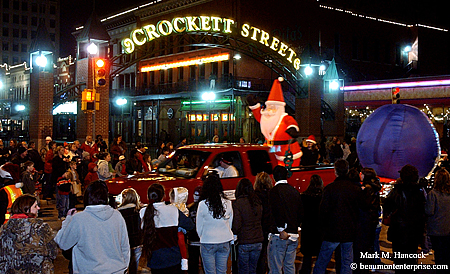
While the physical reaction isn't as obvious, the brain connects viewers' emotional content to images. The physical reaction is more on a cellular, nervous system level than a muscular reaction. Viewers' skin may tingle, stomachs may clinch, tears may form. These are all physical manifestations of emotional reactions to chemically-stored images within the brain.

Many emotions have become verbs. Scream and cry are common. Other emotions are implied and understood by the viewer from facial expressions. A person recoils (in fear or pain).

These emotions are best displayed on the subject's face. This is why most editors want to clearly see people's faces. Often, body language or position alone can also convey the emotion without the ability to see the subject's face. However, readers can more rapidly and effectively connect directly to the subject if the subject's eyes are visible (and in focus).

The viewer feels the emotion while seeing the image. PJs want to tap into our viewers' feelings to maximize the impact of our images.

As such, viewers are likely to absorb images completely when emotional elements are introduced. Rather than dwelling on the obvious, let's understand this is the key to a successful image.

PJ's goal
The goal of PJ work is to communicate with viewers through truthful images and words. If we place subjects in context and create sympathy/empathy while documenting a powerful action verb and strong emotional content, we have succeeded.

When combined, these ingredients connect multiple neural and physical chemical pathways to a mental image for the viewer. If successful, we've overwritten many previous images in the viewers' brain chemistry.

If all of this can be done while presenting a new word to our viewers, we've created something truly worthy of our viewers' time.

Enough for now,